Facelift
Repositioning lower-face and jowl descent through SMAS and deep plane facelift techniques, planned individually for patients in Istanbul.
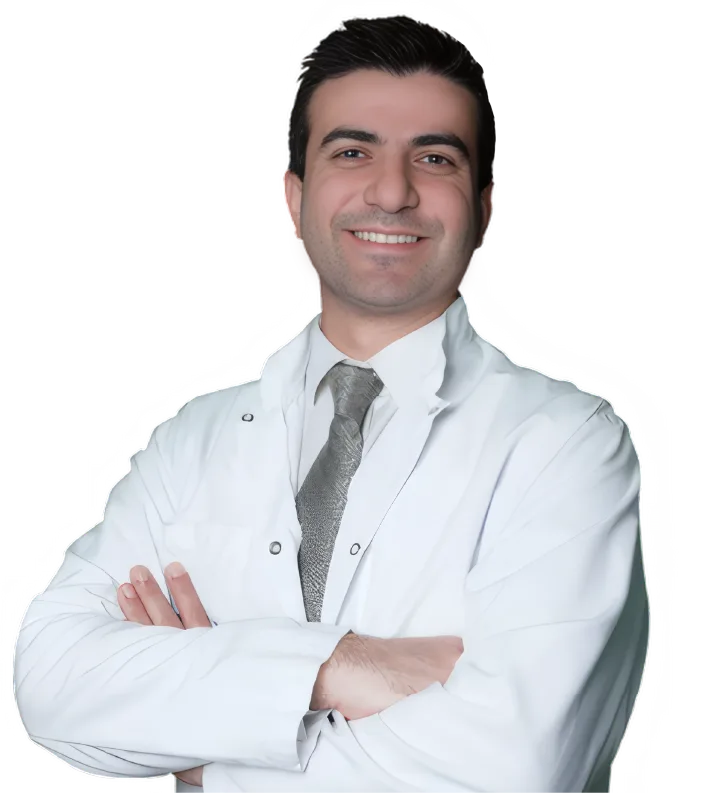
Doç. Dr. Osman Halit Çam
ENT & Head and Neck Surgery · Üsküdar, Istanbul
{ AI · pre-assessment }
onlineLet's talk about your face

AI responses are not a substitute for a medical diagnosis.
A facelift repositions the sagging tissue of the lower face and jowls in either the SMAS plane or the deeper deep plane. The technique is chosen according to how deep the descent runs, decided individually at examination.
- Type
- Surgical
- Duration
- 2-4 hours
- Anesthesia
- General
- Stay
- One night
- Recovery
- 7-10 days
A facelift (medically rhytidectomy) is a surgical procedure that repositions the tissue of the lower face and jowl line that has descended over the years and corrects the skin excess that comes with it. This page focuses on the surgical treatment of lower-face and jowl sagging, the technical difference between the SMAS and deep plane facelift approaches, and the recovery process. The aim is not to “change” the face but to rest the tired contours of the lower face within a natural balance.
Summary: A facelift repositions lower-face and jowl descent in either the SMAS plane or the deeper deep plane. In the SMAS technique the skin and the superficial musculoaponeurotic system are tightened as two separate layers; in the deep plane facelift the retaining ligaments are released and skin, SMAS and fat move together as one block in a deeper plane. Which technique suits a face is a matter of indication decided at examination, not of superiority. Surgery is performed under general anaesthesia over 2-4 hours, social recovery is usually 7-10 days, and a noticeable effect lasts around 8-12 years. This page is informational; the decision is made by physician examination.
This procedure sits within the broader field of facial aesthetics; for the general framework of which region calls for which procedure, see facial aesthetics.
Table of Contents
Which region does this facelift target
This facelift targets laxity of the lower face (the lower cheek line, the jaw corner, the sagging pockets known as jowls) and the jawline transition. A deepening nasolabial fold, marionette lines at the corners of the mouth and a jawline that has lost its definition are the typical findings of this region. The upper face and the area around the eyes follow different surgical logic and are assessed separately.
The face is not read in isolation — the brow, the eyes, the cheek, the jaw and the neck together form one whole, so boundaries are drawn honestly at examination. Deep neck descent and platysmal bands have their own surgery, covered under neck lift. Excess eyelid skin is evaluated under eyelid surgery, and midface volume loss over the cheekbone under cheek lift. These regions are often planned together in a single combined assessment, but each carries its own surgical reasoning.
The layers of the face and the SMAS concept
The face is built from layers stacked one upon another: thin elastic skin at the surface, fat compartments beneath it, the muscles of expression below those, and a fibrous sheet binding them all — the SMAS (superficial musculoaponeurotic system). The SMAS is the centre of the structure that suspends the face; with ageing this layer and the retaining ligaments anchoring it to the bone gradually loosen, and the lower face surrenders to gravity.
Tightening the skin alone therefore falls short — skin pulled tight sags again in time and leaves an unnatural look. A modern facelift does its real work in the SMAS plane: when the support layer is repositioned, the skin settles back without bearing tension. There are two principal ways of working with the SMAS, and the difference between them is the depth at which the surgery is carried out.
SMAS versus deep plane: the technical difference
Both techniques address the SMAS; the distinction is the plane in which the tissue is released. In the SMAS technique, the skin is raised in its own plane and the SMAS layer beneath is tightened separately — by folding (plication) or by removing a strip (resection) — and suspended upward and back. Skin and SMAS are worked as two independent planes.
In the deep plane facelift, the skin is not separated from the SMAS. Instead the dissection descends into a deeper plane beneath the SMAS, and the retaining ligaments that tether the face are released. Skin, SMAS and fat are then repositioned together as one combined block. Releasing the ligaments allows lower-face and jowl descent to be corrected in this deeper plane, with the pull carried by the support layer rather than loaded onto the skin.
Which technique is appropriate is a question of indication, not superiority. Where descent sits mainly at the skin level and is moderate, a SMAS-based approach may be sufficient; where the ligaments have visibly loosened and the jawline transition has been erased, the deep plane approach comes into consideration. The decision is made at examination according to skin thickness, the depth of descent and the individual’s anatomy.
| Criterion | SMAS technique | Deep plane facelift |
|---|---|---|
| Plane worked | Skin and SMAS in separate planes | Skin-SMAS-fat as one block, in the plane beneath the SMAS |
| Retaining ligaments | SMAS tightened; ligaments usually preserved | Retaining ligaments released |
| Leading indication | Moderate lower-face descent | Pronounced lower-face and jowl sagging, ligament laxity |
| Recovery tendency | Swelling tends to settle earlier | Deeper dissection may prolong swelling |
The table summarises the technical orientation; in both techniques the outcome and recovery vary from person to person. The constant across both is that tension is carried by the deep support layer, never by the skin.
Who may be a candidate
A facelift is tied not to a fixed age threshold but to the degree of tissue laxity. Pronounced lower-face and jowl sagging, jowl formation, a jawline that has lost its definition and deepening nasolabial and marionette lines are the principal grounds for assessment. The point at which skincare or energy-based devices no longer suffice is the point at which a surgical evaluation becomes reasonable.
Skin quality, bone structure, general health and smoking are decisive in the candidacy decision. Systemic illness, blood-thinning medication and active skin infection affect the timing of the procedure. Because smoking impairs skin circulation and considerably complicates healing, it stands out in candidate assessment. A realistic expectation — looking not like “someone else” but like one’s own self of a few years earlier — is the most important quality in a good candidate.
At the first consultation the level of the descent is assessed (skin, fat, SMAS or bone support), along with skin thickness, the hairline and ear shape for planning incisions, and any history of fillers, thread suspension or previous surgery. This also weighs whether non-surgical options are enough, so a first examination does not mean an immediate decision to operate — which technique, when, and indeed whether to operate at all, is clarified here.
The surgical process
A facelift is generally performed under general anaesthesia and lasts 2-4 hours depending on its scope, most often requiring one night in hospital. Incisions begin within the hairline, follow the natural crease in front of the ear and extend to the concealed line behind it; this placement lets the scars hide within the hair and natural folds.
According to the chosen technique, the surgeon releases the skin and support layer in the appropriate plane, repositions the SMAS or the deep plane, corrects the skin excess without creating tension, and closes the incisions. Because the lower face and jowl line are treated as one whole, the refinement of the jaw corner and jaw-neck transition takes shape at this stage. Temporary drains are often placed at the end and a light dressing wrapped around the head; these are removed in the first days.
When appropriate, and following a combined assessment, the procedure may be planned in the same session as surgery of other regions, which lengthens the total time. Deep neck refinement, eyelid excess or midface volume loss each require separate evaluation on their own region pages.
Recovery timeline
Recovery is gradual, and the expected normal of each stage is shared in advance; the swelling-and-bruising phase must not be confused with the final result. The timeline below is a general frame and shifts with the technique, the individual and whether combined procedures are performed.
- First week: Swelling and bruising are marked in the first 48 hours. If the neck/platysma was treated, cold should not be applied to the neck; a cool pack should be applied only to the facial area specified in the surgeon’s personal instructions, and the head should be kept elevated to reduce the oedema. Sutures are usually removed on days 5-7; hair washing begins on day 2-3 with the doctor’s approval.
- Second week: Bruising largely subsides and the oedema decreases. A cautious return to social life begins in this period; covering with make-up suits most people.
- Weeks 3-6: Most of the swelling resolves and the facial contours become clearer. Light exercise may resume; heavy lifting and blood-pressure-raising activity are still avoided.
- Months 3-6: Scars fade, the tissue fully settles, and the final result is read during this period.
The variable that most affects recovery is smoking; it must be stopped for at least four weeks before and after the procedure, otherwise impaired skin circulation raises the risk of healing problems. In the same window, alcohol, aspirin-group painkillers and certain supplements that increase bleeding tendency are discontinued with the doctor’s approval.
Incision placement and longevity
Incision scars are set along the hairline, the crease in front of the ear and the concealed lines behind it; this design aims to keep them unnoticed in everyday view. Scar maturation takes time: lines that are red and prominent in the first weeks fade over months and disappear within the natural folds. The pace of scar healing varies from person to person with skin type, genetic predisposition and smoking.
The honest frame on longevity is this: a facelift does not stop time — it rewinds the clock and slows ageing. The ageing process continues after surgery too; the difference is that it now starts from a better point. A noticeable effect generally lasts 8-12 years, though this range shifts with skin quality, lifestyle and technique. The goal is not a fixed “youth” but resting the fatigue of the years once more.
International patients travelling to Istanbul
For patients travelling from abroad, the path runs from consultation to surgery as a process rather than a single visit. Assessment usually begins remotely: photographs and medical history allow a preliminary evaluation of whether a SMAS or deep plane approach fits, and what a realistic plan looks like. This remote stage shapes expectations before any travel.
On arrival, an in-person examination confirms the plan, and pre-operative tests — blood work, an ECG where required and an anaesthesia consultation — are completed before surgery. Because tissue laxity and skin quality must be examined directly, the in-person consultation cannot be replaced by remote assessment alone.
The interval to keep before flying home is set individually, according to how each person’s swelling, bruising and wound healing progress, rather than by a fixed number of days. Suture removal, follow-up checks and the surgeon’s clearance guide the timing, so planning the stay with room beyond the minimum lets the early recovery pass more comfortably.
This content is for informational purposes only; diagnosis and treatment require an in-person physician examination. Surgical outcomes vary from person to person.
References
Frequently Asked Questions
What is the difference between a SMAS and a deep plane facelift?
In the SMAS technique the skin and the superficial musculoaponeurotic system are handled as two separate planes, and the support layer is tightened on its own. In the deep plane facelift the dissection goes beneath the SMAS, retaining ligaments are released, and skin, SMAS and fat move together as one block. Which suits a face depends on the depth of descent, decided at examination.
Which facelift technique is right for me?
This is a question of indication, not of one method being superior. Descent mainly at the skin level with moderate laxity may be addressed by a SMAS-based approach, while pronounced lower-face and jowl sagging with loosened ligaments brings the deep plane approach into consideration. Skin thickness and anatomy guide the decision at an in-person examination.
How long does a facelift result last?
A noticeable effect typically persists for 8-12 years, though this range shifts with skin quality, lifestyle and technique. Ageing continues after surgery; the result is a starting point rewound by several years, not a fixed state.
Will the scars be visible?
Incisions follow the hairline, the natural crease in front of the ear and the concealed line behind it, so scars settle within hair and natural folds. They are red and noticeable in the first weeks and fade over months; healing speed varies from person to person.
How is a facelift planned for international patients travelling to Istanbul?
Assessment usually begins remotely with photographs and history, followed by an in-person consultation and pre-operative tests on arrival. The interval before flying home is set individually according to how recovery progresses, not by a fixed number of days.
Can a facelift be combined with neck or eyelid surgery in the same session?
In suitable cases a combined assessment is possible. Neck lift and eyelid surgery carry their own surgical detail, and the decision is made by the combined examination — the boundaries between these regions are drawn individually.
Procedures often evaluated together
-
Facial Aesthetics
A whole-face approach that reads each region on its own — matching the right surgical or non-surgical procedure to the right area.
-
Neck Lift
Neck aesthetic procedure that surgically tightens loosened neck skin, submental fat and the platysma muscle beneath the chin.
-
Eyelid Surgery
Surgical correction of upper eyelid skin excess, lower eyelid bags and fat pads — with the critical distinction between a heavy lid and a low brow (blepharoplasty).
-
Cheek Lift
Repositioning of descended cheek fat and skin tissue in the midface region.


Schedule a Consultation
Your information reaches Assoc. Prof. Dr. Çam's clinic. A response is made within 24 hours.