Septorhinoplasty
Combined nasal surgery that corrects a deviated septum (function) and nasal shape (aesthetics) together in a single session.
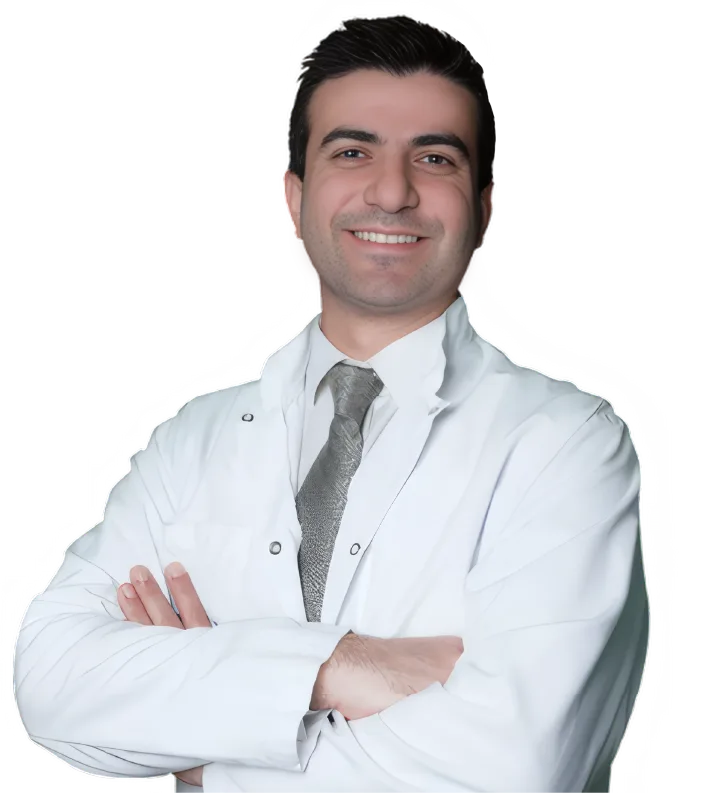
Doç. Dr. Osman Halit Çam
ENT & Head and Neck Surgery · Üsküdar, Istanbul

Septorhinoplasty — clinic video
{ AI · pre-assessment }
onlineLet's talk about your nose

AI responses are not a substitute for a medical diagnosis.
Konuyla ilgili kısa videolar
Tüm videolar →Doç. Dr. Çam'ın YouTube kanalından bu konuyla ilgili kısa açıklamalar.
-
Septorinoplasti: Daha İyi Nefes, Daha İyi Görünüm
Septorhinoplasty is a combined nasal operation in which a deviated septum (function) and an aesthetic nasal deformity (shape) are corrected together in a single session, with one anaesthetic and one recovery period instead of two separate procedures.
- Type
- Aesthetic and functional surgery
- Duration
- 3-4 hours
- Anesthesia
- General
- Stay
- 1 night
- Recovery
- 7-10 days for social recovery, 12-18 months for the final result
Özet: Septorhinoplasty is a combined nasal operation in which functional and aesthetic concerns are assessed within one surgical plan. It may involve the internal septal structure and the external nasal framework, but suitability cannot be determined from symptoms alone. Planning, risks, expected changes and recovery vary according to nasal anatomy, general health and the scope of surgery. An in-person physician examination is required before any treatment decision.
Septorhinoplasty is a surgical procedure that addresses the internal and external structures of the nose within an integrated plan. Its purpose, scope and potential limitations are determined individually after the nasal airway, septum, external framework, medical history and the person’s expectations have been evaluated together.
Table of Contents
This page explains the definition, assessment and general surgical framework of septorhinoplasty without offering a self-diagnosis or treatment-selection tool. The sections distinguish the procedures conceptually, describe the factors considered during medical planning and outline recovery in qualitative terms. Individual decisions require an examination and cannot be based solely on the information below.
- What Is Septorhinoplasty?
- Which Is Right for Me: Septoplasty, Rhinoplasty or Septorhinoplasty?
- Why Is Septorhinoplasty Combined in a Single Session?
- Who Is a Candidate for Septorhinoplasty?
- How Is Septorhinoplasty Planned?
- How Is the Operation Performed?
- How Does the Recovery Process Unfold?
- International Patients
- When Should You Consult a Specialist?
- Frequently Asked Questions
- References
What Is Septorhinoplasty?
Septorhinoplasty is a combined nasal surgery in which the septum, airway and external nasal framework may be addressed within the same operative plan. It differs from a procedure limited to the septum or external shape because functional and aesthetic objectives are evaluated together. This definition does not establish whether the operation is appropriate for a particular person.
The internal structure of the nose includes the septum and airway, while the external structure includes the bony pyramid, cartilage framework and skin. These structures are anatomically related, so a planned change in one area may need to be considered alongside the support and shape of another.
A deviated septum, an external shape concern or breathing-related complaints do not independently establish a need for combined surgery. Similar complaints can have different contributing factors, and the relevance of each structure is determined through medical history, internal examination and external analysis.
Which Is Right for Me: Septoplasty, Rhinoplasty or Septorhinoplasty?
Septoplasty, rhinoplasty and septorhinoplasty differ in the anatomical areas and objectives included in their plans. Symptoms or appearance concerns alone cannot identify the appropriate operation. A physician evaluates the internal airway, septum, external framework, medical history and expectations before discussing whether a functional, aesthetic or combined approach may be considered.
| Scope being evaluated | Situations a physician may assess | Basis of the decision |
|---|---|---|
| Internal nasal structures | Airway complaints, septal findings and related internal anatomy | Examination findings, functional assessment and individual health factors |
| External nasal framework | Concerns involving shape, proportion or changes after trauma | External analysis, expectations, anatomical limits and surgical risks |
| Internal and external structures together | Coexisting concerns involving breathing and nasal form | Integrated examination of function, structure, expectations and possible alternatives |
Further information about procedures focused on the internal septal structure is available on the septoplasty page. Procedures centred on the external nasal framework are discussed on the rhinoplasty page.
These distinctions describe procedural scope rather than a decision rule. Nasal obstruction, breathing difficulty, snoring or dissatisfaction with appearance may be associated with multiple conditions. The choice between observation, nonsurgical management and surgery can only be discussed after the relevant factors have been assessed.
Why Is Septorhinoplasty Combined in a Single Session?
A combined operation may be discussed when changes to the septum and external nasal framework need to be planned in relation to one another. The reason is anatomical coordination rather than an assumption that a combined procedure is preferable. Staged and combined approaches each have limitations, risks and circumstances in which they may or may not be suitable.
Factors considered during this discussion can include:
- Relationship between structures: The septum contributes to internal support, while the cartilage framework influences the external form.
- Scope of correction: Functional and aesthetic objectives may affect different but connected parts of the nose.
- Availability of septal cartilage: If cartilage is required for support, the surgeon evaluates whether septal tissue is suitable and whether its use would preserve adequate structural support.
- Overall surgical plan: Anaesthesia, operative extent, recovery requirements and possible complications are considered together.
- Alternative sequencing: A staged plan may be considered when general health, priorities, uncertainty about aesthetic goals or anatomical findings make separate decisions more appropriate.
Combining procedures does not guarantee a more predictable aesthetic or functional outcome. A broader operation may also involve a wider surgical field and recovery burden. The balance between a combined plan and separate interventions therefore depends on examination findings, medical suitability, realistic expectations and informed discussion of risks.
Who Is a Candidate for Septorhinoplasty?
Candidacy for septorhinoplasty is determined through an individual medical and anatomical assessment, not through a checklist of symptoms. A physician considers whether internal functional findings and external structural concerns coexist, whether both require surgical attention and whether a combined operation is medically appropriate. The person’s expectations and understanding of limitations are also evaluated.
The assessment may cover:
- The nature and pattern of breathing-related complaints
- The person’s concerns about nasal shape or proportion
- Changes involving the nose after trauma
- Previous nasal fractures or operations
- The condition of the septum and internal nasal tissues
- Allergic complaints and other factors that may influence nasal breathing
- Current medication, smoking habits and general health
- Whether expectations are compatible with anatomical and surgical limits
Difficulty breathing, obstruction, snoring or reduced sleep quality should not be treated as proof that the septum is the only contributing factor or that septorhinoplasty is required. Likewise, a shape concern does not by itself indicate a combined procedure. The possible contribution of structural and acquired factors is assessed without presuming a single cause.
How Is Septorhinoplasty Planned?
Septorhinoplasty planning evaluates the internal airway and external nasal framework as connected but distinct areas. The process aims to clarify what has been observed, which concerns may be addressed surgically and what limitations remain. Planning also includes general health, previous interventions, medications, expectations, anaesthesia considerations and the possible risks of the proposed operation.
The assessment may include:
- Medical history: Previous trauma, allergic complaints, earlier surgery, current medication, smoking habits and relevant health conditions
- Internal examination: The course of the septum, condition of the turbinates and areas that may affect the airway
- External analysis: The bony pyramid, cartilage framework, nasal tip and relationship with facial proportions
- Endoscopic assessment: Visual examination of internal nasal structures, with additional evaluation if medically required
- Expectation discussion: Separate clarification of functional concerns, aesthetic preferences and realistic limits
- Risk discussion: Review of the proposed extent of surgery, recovery uncertainty and possible complications
The plan is not based solely on photographs or a list of complaints. Internal findings, external anatomy and personal priorities must be considered together. Even with detailed planning, a particular functional or aesthetic result cannot be guaranteed, and the course of healing may differ between individuals.
How Is the Operation Performed?
Septorhinoplasty may be performed with an open or closed technique under general anaesthesia, depending on the anatomy and planned corrections. The operation can involve the septum, turbinates, bony framework, nasal dorsum or tip. Its exact sequence and extent are individual, and surgery carries recovery burdens, uncertainties and the possibility of complications.
Possible components of the operative plan include:
- Septal stage: Deviated portions of cartilage or bone may be corrected while the surgeon seeks to preserve sufficient structural support.
- Turbinate management: If internal examination identifies relevant turbinate enlargement, an additional procedure may be considered as part of the plan.
- External framework stage: The dorsum, tip, cartilage framework or other external structures may be addressed according to the agreed objectives.
- Support grafting: Septal cartilage may be evaluated as graft material when support is required, provided its use is considered anatomically appropriate.
- Postoperative support: A splint or internal packing may be used depending on the procedure and the surgeon’s assessment.
Open and closed techniques are not interchangeable labels for better or worse results. Each provides different access to nasal structures and has its own limitations. Swelling, bruising, obstruction, pressure, discomfort and other surgical complications may occur; their extent and course cannot be predicted identically for every person.
Preserving structural support is an important part of planning, but it does not eliminate surgical uncertainty. If postoperative symptoms are severe or rapidly worsening, prompt assessment at a healthcare facility is required.
How Does the Recovery Process Unfold?
Recovery after septorhinoplasty is an individual process in which internal tissues and the external framework may change at different rates. Swelling, bruising, obstruction, pressure and temporary changes in appearance can occur. The timing of daily activities, splint or packing management, medication use and follow-up is determined by the treating physician rather than a fixed timetable.
| Recovery area | What may be experienced or assessed | Appropriate framework |
|---|---|---|
| Early postoperative period | Obstruction related to internal support, swelling, bruising, pressure or discomfort | Follow the individual discharge and medication plan |
| Wound and support care | Splint, packing or sutures may require clinical review | Removal or adjustment is performed according to the physician’s plan |
| Return to daily activities | Readiness varies with surgical extent, healing and the demands of the activity | Obtain individual guidance before resuming exertion |
| Breathing-related changes | Nasal airflow may fluctuate while internal tissues recover | Functional change is assessed during follow-up |
| External appearance | Swelling and tissue settling may continue gradually | Early appearance does not represent a guaranteed final result |
| Longer-term assessment | Structural stability, breathing and appearance are reviewed together | Outcome and further needs are evaluated individually |
Advice about exercise, sleeping position, glasses, nasal care and smoking is tailored to the operation and the person’s health. Medication should not be started, stopped or reduced without consulting the treating physician. Instructions concerning saline products or other postoperative care should follow the individual clinical plan rather than a general online description.
Recovery does not follow an identical sequence for everyone. Functional changes may fluctuate, and the external appearance can continue to evolve as tissues settle. Neither breathing improvement nor a specific aesthetic result can be guaranteed; the outcome depends on anatomy, the scope of surgery, healing and other individual factors.
International Patients
For a person travelling from abroad, safe planning requires continuity of medical assessment before surgery and access to appropriate follow-up afterward. Photographs or an online conversation may support preliminary information gathering, but they cannot replace an in-person examination. Travel arrangements should not determine surgical suitability, operative scope or the timing of postoperative care.
Relevant considerations include:
- Sharing an accurate medical history and current medication list
- Allowing for an in-person examination before any final decision
- Understanding the proposed operation, alternatives, limitations and risks
- Planning access to postoperative reviews as directed by the treating physician
- Knowing where assessment will be available if symptoms worsen after travel
- Ensuring that remote communication does not replace a necessary physical examination
Travel, accommodation and remote follow-up should not be presented as benefits of surgery or as reasons to select a combined procedure. The clinical decision remains dependent on examination findings, medical suitability and the availability of safe postoperative care.
When Should You Consult a Specialist?
A physician assessment may be appropriate when functional concerns, changes in nasal shape or the effects of previous trauma need to be evaluated together. Consultation does not imply that surgery is required. Its purpose is to examine possible contributing factors, distinguish internal from external issues and discuss whether observation, other management or a surgical option warrants consideration.
Examples of topics that may be brought to an assessment include:
- Persistent concerns about nasal breathing
- A perceived change in both breathing and nasal form after trauma
- Questions about the relationship between septal findings and external structure
- Ongoing concerns after previous nasal surgery
- Uncertainty about whether functional and aesthetic goals can be considered separately
Snoring and sleep-related complaints should not automatically be attributed to the nose. Their origin may involve more than one factor, and a broader medical assessment may be required. If symptoms are severe or rapidly worsening, prompt assessment at a healthcare facility is required.
These answers explain procedural distinctions and the role of medical assessment without identifying a suitable operation for an individual reader. Septorhinoplasty is not selected through symptoms, photographs or online comparison alone. Anatomy, general health, expectations, alternatives, risks and the likely scope of intervention must be reviewed during an in-person physician examination.
References
No verified document-level sources were provided for this draft. Institution homepages and general search portals have therefore not been listed as clinical references, and the qualitative information on this page should not be interpreted as evidence for an individual diagnosis, treatment choice or expected surgical result.
This content is for informational purposes only; diagnosis and treatment require an in-person physician examination.
Frequently Asked Questions
What is the difference between septoplasty, rhinoplasty and septorhinoplasty?
Septoplasty focuses on the septum and internal nasal function. Rhinoplasty focuses on the external framework and shape. Septorhinoplasty includes functional and aesthetic objectives within one plan. These definitions describe scope; they do not determine which procedure, if any, is appropriate for a particular complaint. Additional procedural information appears on the [septoplasty](/en/services/septoplasty) and [rhinoplasty](/en/services/rhinoplasty) pages.
Is septorhinoplasty a difficult operation?
It is a comprehensive operation because internal and external nasal structures may need to be assessed and altered together. The complexity depends on anatomy, previous trauma or surgery, the intended changes and general health. Detailed planning does not remove surgical risks or guarantee a particular functional or aesthetic result.
Can the aesthetic correction be left for later?
Aesthetic and functional procedures may be planned together or separately. Neither sequence is automatically preferable. The decision depends on anatomy, medical suitability, priorities, the relationship between the intended corrections and the risks of each plan. Separate recovery periods may be relevant, but convenience alone should not determine the choice.
How long does recovery take?
There is no single recovery period that applies to every septorhinoplasty. Internal healing, external swelling, return to activities and tissue settling may progress differently. The treating physician provides an individual estimate based on the operation and subsequent examinations. Fixed online timelines should not be used to make work, travel or treatment decisions.
Does a septorhinoplasty also help with snoring and sleep?
Snoring and sleep-related complaints can have more than one contributing factor. Changes in nasal airflow may be relevant in some people, but septorhinoplasty does not guarantee that snoring or sleep concerns will lessen. A physician should assess the broader clinical picture rather than assuming that the nose is the sole cause.
Procedures often evaluated together
-
Rhinoplasty
Rereading the architecture of the nose through function and proportion; aesthetic rhinoplasty where breathing and appearance are planned together.
-
Septoplasty
Aims to improve nasal airflow when obstruction is caused by a deviated septum. Reshaping the external nose is not the purpose of the operation.





Schedule a Consultation
Your information reaches Assoc. Prof. Dr. Çam's clinic. A response is made within 24 hours.