Sinusitis
Inflammation of the sinus cavities — ranging from an acute to a chronic form, each with its own treatment protocol.

Doç. Dr. Osman Halit Çam
ENT & Head and Neck Surgery · Üsküdar, Istanbul
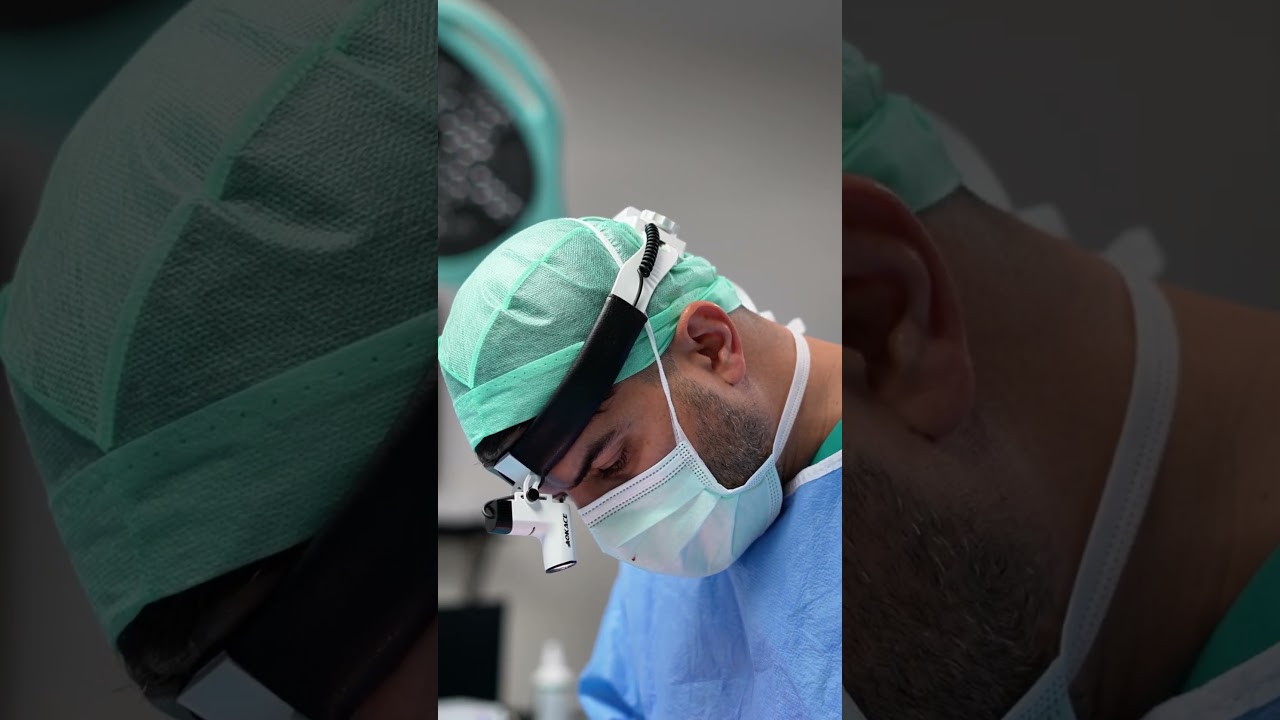
Sinusitis — clinic video
{ AI · pre-assessment }
onlineLet's talk about your nose

AI responses are not a substitute for a medical diagnosis.
Konuyla ilgili kısa videolar
Tüm videolar →Doç. Dr. Çam'ın YouTube kanalından bu konuyla ilgili kısa açıklamalar. Toplam 2 video.
-
Sinüs Cerrahisi ile Rinoplasti
Sinüzitim var. Ameliyat olmalı mıyım?
Sinusitis is inflammation of the sinus cavities within the facial bones. Acute sinusitis (under 4 weeks) is usually viral and settles with supportive care, while chronic sinusitis (over 12 weeks) may involve structural causes and is managed with medical treatment and, when needed, endoscopic surgery.
- Type
- Medical + surgical
- Duration
- 1–2 hours (surgery)
- Anesthesia
- General (surgery)
- Stay
- Same day or 1 night
- Recovery
- 1–2 weeks
Özet: Sinusitis is inflammation of the mucosa lining the sinus cavities and is also commonly described as rhinosinusitis. Acute and chronic forms are distinguished partly by duration, but symptoms alone do not establish the cause or determine treatment. Antibiotics are not appropriate for every sinus infection, and medication changes require physician guidance. Persistent, recurrent, severe or rapidly worsening complaints require medical assessment.
Sinusitis is an inflammatory condition affecting the mucosa of the air-filled sinus cavities within the facial and skull bones. The term rhinosinusitis reflects that inflammation of the nasal lining and sinus mucosa may occur together. Swelling, altered mucus drainage and individual anatomical or inflammatory factors can contribute to congestion, discharge, facial pressure and changes in smell.
Table of Contents
This article explains how sinusitis patterns are described, what symptoms may accompany them and why a physician must interpret the overall clinical picture. It also outlines the limits of home support, the role of medical assessment, structural factors, childhood considerations and circumstances in which timely evaluation is important.
- How Are Acute and Chronic Sinusitis Distinguished?
- What Are the Symptoms of Sinusitis?
- Viral or Bacterial? Does Every Sinus Infection Need Antibiotics?
- Home Support for Sinus Infections
- Medical Treatment
- Structural Causes of Chronic Sinusitis
- Who Is a Candidate for Endoscopic Sinus Surgery (FESS)?
- Childhood Sinusitis and the Adenoids
- Sinusitis Care for International Patients
- When Should You See an ENT Specialist?
- Frequently Asked Questions
- References
How Are Acute and Chronic Sinusitis Distinguished?
Acute, subacute and chronic sinusitis are clinical descriptions based partly on how long the inflammatory picture continues. MedlinePlus describes acute sinusitis as lasting up to 4 weeks, subacute sinusitis as lasting between 4 and 12 weeks, and chronic sinusitis as continuing beyond 12 weeks. Duration alone, however, does not determine the cause or treatment.
A physician also considers how the symptoms began, whether they fluctuate, whether symptom-free periods occur and whether nasal examination findings support sinus inflammation. Complaints returning after medication is stopped do not, by themselves, define chronic sinusitis. Repeated episodes likewise require individual assessment rather than self-classification according to a numerical threshold.
| Feature considered | Acute pattern | Chronic pattern |
|---|---|---|
| Duration description | Up to 4 weeks | Longer than 12 weeks |
| Course | May begin over a relatively short period | May persist or fluctuate |
| Clinical context | Often assessed alongside a recent respiratory illness | Inflammatory, anatomical and environmental factors may be evaluated together |
| Structural assessment | Considered when the history or examination makes it relevant | May form part of a broader evaluation |
| Antibiotic decision | Not based on duration or discharge colour alone | Not automatically indicated by chronicity |
| Treatment planning | Depends on the overall clinical picture | Individualised according to findings and accompanying conditions |
| Surgical assessment | Not determined by symptoms alone | May be discussed only after appropriate examination and treatment review |
These categories help organise medical assessment; they are not an at-home diagnostic test. A person with nasal congestion or facial pressure cannot reliably determine the subtype, underlying mechanism or need for medication from duration alone.
What Are the Symptoms of Sinusitis?
Sinusitis may be accompanied by nasal congestion, nasal or postnasal discharge, facial pressure and reduced smell. None of these complaints is specific to sinusitis, and their combination does not confirm a diagnosis. A physician evaluates their onset, distribution, severity, associated findings and possible alternative explanations before reaching a clinical conclusion.
Symptoms that may be discussed during an examination include:
- Nasal congestion: A blocked or restricted sensation that may vary during the day.
- Nasal discharge: Secretions may differ in colour and consistency; colour alone does not establish whether an infection is bacterial.
- Postnasal discharge: Secretions felt at the back of the throat may accompany throat irritation, voice changes or coughing.
- Facial pressure or discomfort: Its location and relationship to other symptoms require interpretation because facial pain can have different causes.
- Reduced smell or taste: This may occur when nasal airflow or the olfactory region is affected, but it is not unique to sinusitis.
- Headache, fatigue or fever: These may occur in an acute illness but cannot independently identify its cause.
- Dental discomfort: Upper-tooth discomfort can overlap with sinus complaints; a dental origin is one of several possibilities a physician may evaluate.
Bending forward may alter facial pressure in some people, but this observation does not distinguish sinusitis reliably from every other cause. Recording when symptoms began, how they changed and which complaints occur together can support preparation for an examination; it is not a screening or measurement method.
Viral or Bacterial? Does Every Sinus Infection Need Antibiotics?
No. Acute sinus symptoms can occur in viral illnesses, while bacterial infection represents another possibility within the differential assessment. Symptoms, discharge colour or duration should not be used alone to self-diagnose a bacterial infection. The decision to prescribe an antibiotic belongs to a physician who can assess the complete clinical picture.
Antibiotics do not treat viral infections. Their unnecessary or inappropriate use may cause adverse effects and contributes to antimicrobial resistance, a public-health concern described by the World Health Organization.
During assessment, a physician may consider:
- The pattern and progression of the complaints
- Whether symptoms improved and then changed again
- Examination findings
- Accompanying medical conditions
- Previous medication use and response
- Whether another nasal, dental or facial condition should be considered
These points are not a checklist for deciding independently whether antibiotics are needed. Coloured discharge, facial pressure or a prolonged complaint can occur in more than one clinical situation. Antibiotics should not be started, changed, reduced or discontinued without physician guidance.
Home Support for Sinus Infections
Home measures may support comfort during an acute respiratory illness, but they are not alternatives to medical assessment, prescribed treatment or objective evaluation when these are needed. No home observation can determine whether symptoms are viral, bacterial, inflammatory, dental or structurally related. Any supportive choice should account for age, accompanying disease and current medication.
General considerations include:
- Adequate fluid intake and rest may support overall comfort during an illness.
- Avoiding cigarette smoke may reduce additional irritation of the nasal lining.
- Warm vapour may feel soothing to some people, but excessive heat can cause injury.
- Saline products are available in different forms, but nasal irrigation techniques are not described here because suitability and safe use depend on individual circumstances.
- Decongestants and medicated nasal sprays may have contraindications, interactions or use limitations.
Supportive measures should not create an expectation that a persistent or worsening condition must first be managed at home. Prescription medicines, including nasal corticosteroids, must not be started, reduced or stopped without consulting the prescribing physician.
Medical Treatment
Medical treatment is individualised according to the suspected cause, symptom pattern, examination findings, accompanying conditions and medicines already being used. Acute and chronic presentations do not share one universal protocol. A physician may discuss symptom-relief measures, nasal medicines or antibiotics when clinically appropriate, while also considering potential adverse effects and contraindications.
In a chronic inflammatory picture, assessment may include allergy, asthma, reflux or other accompanying factors when relevant. Treatment response can vary according to the underlying condition, and failure to improve does not automatically establish a structural obstruction or a need for surgery.
Important medication principles include:
- Antibiotics are not automatically required for sinus symptoms.
- Prescription nasal sprays require individual instructions and follow-up.
- Oral or nasal corticosteroid decisions depend on medical assessment.
- Medication type, dose and duration should not be changed without physician guidance.
- Existing prescribed treatment should not be reduced or discontinued independently.
Medical treatment does not guarantee a particular outcome. The clinical course varies from person to person and may require reassessment if the initial working explanation no longer fits the developing picture.
Structural Causes of Chronic Sinusitis
Structural characteristics may affect nasal airflow or sinus drainage, but their presence does not prove that they are the cause of a person’s complaints. Chronic symptoms can reflect interacting inflammatory, anatomical and environmental factors. Endoscopic examination and imaging findings are therefore interpreted together with the history rather than used as isolated reasons for an operation.
Conditions a physician may evaluate include:
- Septal deviation: A deviated nasal septum may be relevant in some clinical pictures. Neutral procedural information is available on the septoplasty page.
- Nasal polyps: These are inflammatory tissue growths that may affect airflow or sinus openings. General information is available on the nasal polyps page.
- Turbinate enlargement: Enlarged turbinate tissue may contribute to nasal obstruction in some people. The assessment context is described on the nasal turbinate page.
| Finding | What the physician may evaluate |
|---|---|
| Septal deviation | Its location, degree and relationship to the person’s complaints |
| Nasal polyps | Their extent, accompanying inflammation and effect on nasal function |
| Turbinate enlargement | Whether the enlargement is persistent, variable or associated with another condition |
| Narrow sinus drainage pathways | Whether the imaging finding corresponds with symptoms and examination |
| Ongoing inflammation | Possible accompanying conditions and previous treatment response |
Structural findings do not always require correction, and an operation cannot be presented as a guaranteed or permanent solution. Whether findings should be observed, treated medically or considered during surgical planning depends on individual evaluation.
Who Is a Candidate for Endoscopic Sinus Surgery (FESS)?
Functional endoscopic sinus surgery (FESS) may be considered for selected patients after the diagnosis, disease extent, previous treatment and relevant anatomical findings have been evaluated. Symptoms alone, a single scan finding or the presence of a structural variation does not establish candidacy. The expected benefits, limitations and risks must be discussed individually.
FESS is performed through the nasal passages with endoscopic instruments. Its purpose may include improving access to affected sinus pathways or addressing selected diseased tissue while preserving appropriate structures. As an invasive procedure, it carries potential risks, including bleeding, infection, injury to nearby structures, anaesthesia-related events and persistence or recurrence of symptoms.
Surgery does not guarantee that chronic inflammation will disappear, and it does not automatically eliminate the need for later medical care. Postoperative medication and follow-up decisions are made by the treating physician; sprays or other prescribed therapies should not be started, stopped or continued on a fixed schedule without individual instructions.
Balloon sinuplasty is another procedure that may be discussed in selected circumstances. It is not suitable for every sinus condition, and the balance of possible benefit, limitations and procedural risk depends on examination and imaging findings.
This section is informational; surgical candidacy and treatment planning require an in-person physician examination.
Childhood Sinusitis and the Adenoids
Sinus development, age, respiratory infections and adenoid tissue can influence how nasal and sinus complaints appear in children. Symptoms such as congestion, discharge or coughing remain non-specific, so parents should not use them to infer sinusitis or adenoid disease. Paediatric assessment must consider several possible explanations and the child’s overall condition.
Adenoid enlargement or inflammation may be among the conditions evaluated in a child with recurring nasal complaints, but it should not be assumed to be a bacterial reservoir or mechanical cause in every case. Information about this anatomical region is available on the adenoid hypertrophy page.
For appointment preparation, caregivers can note:
- When the complaints began
- Whether symptoms fluctuate or fully settle
- Their relationship to sleep, respiratory illnesses or environmental exposure
- Current and recently used medicines
- Relevant allergy or respiratory history
These observations help communicate the history; they do not screen for sinusitis or determine whether the adenoids are responsible. If symptoms are severe or rapidly worsening, medical attention should be sought without delay.
Sinusitis Care for International Patients
Assessment principles are the same for patients who live locally and those travelling from another country. Existing reports or images can provide background information, but they do not replace an in-person examination. Diagnosis, procedural candidacy and follow-up requirements cannot be finalised solely from remotely shared records or travel availability.
Patients bringing previous medical information may organise:
- A current list of medicines and allergies
- Relevant examination reports
- Existing imaging files and written radiology reports
- Details of previous procedures or treatment responses
- Information about accompanying medical conditions
Travel plans should not determine whether a procedure is medically appropriate or compress the necessary evaluation and follow-up into a predetermined schedule. If treatment is considered, timing and aftercare depend on the individual clinical picture rather than a standard international-patient package.
When Should You See an ENT Specialist?
A physician assessment is appropriate when nasal or sinus complaints persist, recur, significantly affect daily life or do not follow the expected course described during prior medical care. The purpose is not merely to label the symptoms as sinusitis, but to evaluate alternative explanations, accompanying conditions, medication use and whether objective examination is needed.
A medical consultation may address:
- Persistent or fluctuating nasal obstruction
- Recurrent episodes of nasal and facial complaints
- Ongoing changes in smell
- One-sided or otherwise unusual symptom patterns
- Dental symptoms occurring with nasal complaints
- Relevant allergy, asthma or medication history
- Symptoms that change despite previously prescribed care
These features do not correspond one-to-one with a particular disease. They indicate topics a physician may need to interpret alongside examination findings. If symptoms are severe or rapidly worsening, medical attention should be sought without delay.
The course of sinusitis varies according to the underlying factors, and improvement cannot be guaranteed by a single medical or surgical approach. When nasal functional concerns coexist with questions about external nasal shape, the distinction between these issues is outlined on the rhinoplasty page.
This section addresses common decision questions without offering an at-home diagnostic or treatment algorithm. Symptom duration, discharge colour, facial pressure and previous response to medication can all inform an examination, but none independently determines the cause. Treatment choices and medication changes require individual medical evaluation.
References
The following links provide general background information. The AAO-HNS page is a general patient-information portal rather than a document supporting a specific clinical claim in this article.
- American Academy of Otolaryngology–Head and Neck Surgery patient information portal
- National Institutes of Health — MedlinePlus, Sinusitis
- World Health Organization — Antimicrobial Resistance
This content is for informational purposes only; diagnosis and treatment require a physician examination.
Frequently Asked Questions
How do you make a sinus infection go away faster?
There is no universal method that guarantees faster recovery. Rest, adequate fluid intake and avoiding smoke may support comfort, but they do not replace evaluation or prescribed care. Medication should not be started or changed based only on symptoms. The course varies with the underlying cause and the person’s health.
Can sinusitis clear up on its own?
Some acute inflammatory episodes may settle without condition-specific treatment, particularly when they accompany a viral illness. That possibility cannot be assumed for every case. Persistent, recurrent or changing complaints may have different contributing factors and should be assessed rather than managed indefinitely through home observation.
How can I clear my sinuses at home?
No home method can reliably clear every sinus condition or identify its cause. Saline products and medicated sprays differ in suitability, so this article does not provide an irrigation technique, dose or fixed schedule. Prescription treatment should not be started, reduced or stopped without consulting a physician.
What is the best treatment for severe or persistent sinusitis?
There is no single best treatment for every patient. A physician may consider the symptom pattern, examination findings, accompanying inflammatory conditions, structural features and prior treatment response. Medical and surgical options have benefits, limitations and risks; the appropriate approach depends on individual assessment rather than symptom matching.
Does chronic sinusitis always require surgery?
No. Chronicity alone does not establish a need for surgery. A physician reviews whether the diagnosis is supported, which factors may be contributing and how previous treatment was used or tolerated. FESS may be discussed in selected cases, but its outcome cannot be guaranteed and postoperative care remains individualised.
Procedures often evaluated together





Schedule a Consultation
Your information reaches Assoc. Prof. Dr. Çam's clinic. A response is made within 24 hours.