Polysomnography (Sleep Study)
An overnight sleep laboratory study — the test in which brain waves, breathing, oxygen and heart rhythm are recorded simultaneously to diagnose sleep apnoea.
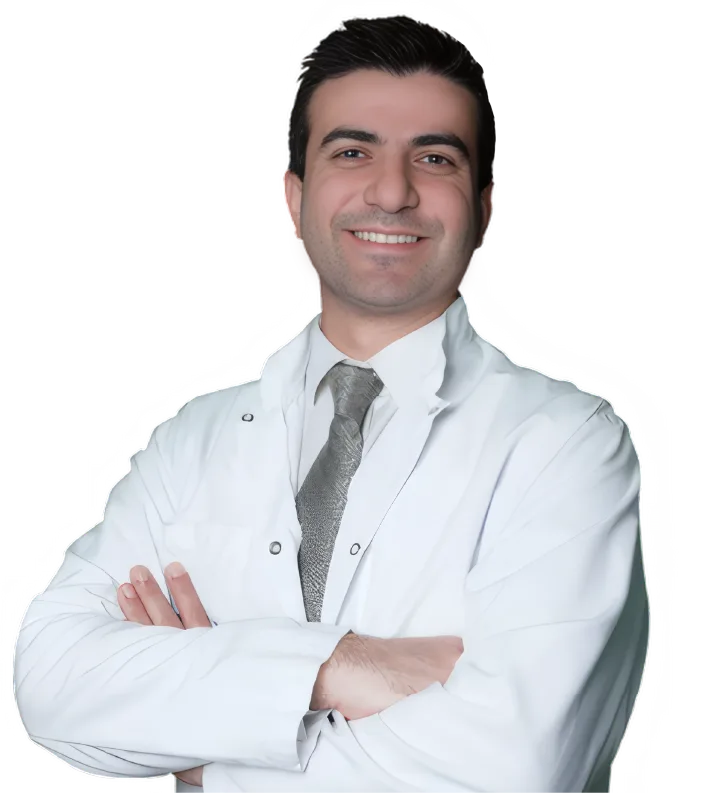
Doç. Dr. Osman Halit Çam
ENT & Head and Neck Surgery · Üsküdar, Istanbul
{ AI · pre-assessment }
onlineLet's talk about your sleep

AI responses are not a substitute for a medical diagnosis.
Polysomnography (sleep study) is an overnight laboratory investigation in which brain waves, eye movements, muscle activity, airflow, blood oxygen and heart rhythm are recorded simultaneously during sleep. It is the reference test for diagnosing sleep apnoea.
- Type
- Diagnostic test
- Duration
- 1 night
- Anesthesia
- None
- Stay
- 1 night (in the laboratory)
- Recovery
- None
Summary: Polysomnography (sleep study) is an overnight investigation that records sleep, breathing, blood oxygen and heart activity together. It can contribute to the assessment of suspected sleep apnoea and other sleep-related concerns, but the findings are interpreted alongside age, symptoms, medical history and examination. The Apnoea–Hypopnoea Index (AHI) is one part of the report rather than a stand-alone diagnosis. The appropriate test and subsequent evaluation vary from person to person.
Polysomnography (sleep study) is an objective sleep assessment performed in a laboratory setting. Commonly abbreviated as PSG, it records several physiological signals at the same time so that sleep stages, respiratory events, oxygen changes and related findings can be evaluated together by a physician.
Table of Contents
The sections below explain why polysomnography may be considered, what the laboratory experience involves, how the report is interpreted and how it differs from a home sleep test. They also clarify the limits of self-interpretation, the importance of age-specific assessment and the safety points that should be discussed with the evaluating physician.
- Why Is a Sleep Study Ordered?
- What Is the Test Night Like?
- What Is Measured During a Sleep Study?
- How Is the Report Read? (AHI)
- In-Lab PSG Versus Home Sleep Test (HSAT)
- What Happens After Diagnosis?
- Sleep Study for International Patients
- Frequently Asked Questions
- When to See a Specialist
- References
Why Is a Sleep Study Ordered?
A sleep study may be ordered when symptoms, medical history or examination findings raise questions about sleep quality, breathing during sleep or unusual night-time events. No single complaint establishes a diagnosis. A physician considers the overall pattern and decides whether objective testing is appropriate and which form of testing can answer the clinical question.
Situations that may be discussed during an assessment include:
- Loud or irregular snoring and breathing pauses noticed by another person
- Daytime sleepiness, fatigue or difficulty maintaining attention
- Unrefreshing sleep or repeated awakenings
- Waking with dry mouth, headache or a choking sensation
- Sleep complaints occurring alongside blood pressure, heart rhythm or metabolic concerns
- Body-weight or upper-airway features that may be relevant to sleep-related breathing
- Uncomfortable leg sensations, repeated movements or unusual behaviour during sleep
- Mouth breathing, restless sleep or behavioural changes in children
These observations do not identify one particular disorder on their own. Similar experiences may arise in different sleep, respiratory, neurological or behavioural contexts, and their significance can differ between adults and children. Keeping a simple note of symptoms and sleep patterns may help prepare for the consultation, but it is not a screening test or diagnostic measurement.
Daytime sleepiness also has a direct safety dimension. If sleepiness or dozing is present, a vehicle must not be driven.
What Is the Test Night Like?
The test night takes place in a sleep laboratory, where surface electrodes and sensors are fitted before the recording begins. The equipment is designed to collect physiological signals while the person sleeps. The exact preparation, recording period and morning procedure depend on the laboratory protocol and the clinical question being investigated.
Practical aspects of the laboratory experience may include:
- Wearing ordinary sleep clothes and bringing familiar personal items if the laboratory permits
- Having electrodes and sensors attached to the skin without an incision
- Being able to change position during sleep
- Receiving assistance from the technician if the cables need to be managed
- Following the laboratory’s instructions about skin, hair products and personal medication
The equipment or unfamiliar environment may cause discomfort or affect sleep for some people. This does not automatically make the study unusable; the physician assesses whether the available recording is sufficient for interpretation. If the data are inadequate, the need for further evaluation is determined individually.
Instructions concerning caffeine, alcohol, sedatives or sleeping medication should be obtained from the responsible physician or sleep laboratory. Alcohol or medication should not be stopped, reduced or changed solely for the test without medical advice. A current medication list should be shared before the recording.
What Is Measured During a Sleep Study?
Polysomnography records several sleep-related functions simultaneously, allowing their timing and interaction to be reviewed. The report may show sleep stages, respiratory events, oxygen changes, heart rhythm and body movements. The channels used can vary according to the laboratory protocol, age and reason for testing, so the table describes their general roles rather than a diagnostic formula.
| Recording channel | Abbreviation | Information available to the physician |
|---|---|---|
| Brain waves | EEG | Sleep stages and brief awakenings |
| Eye movements | EOG | Eye-movement patterns associated with sleep stages |
| Muscle activity | EMG | Chin muscle tone and recorded limb movements |
| Airflow | — | Changes in nasal and oral airflow |
| Respiratory effort | — | Chest and abdominal movement patterns |
| Oxygen saturation | SpO₂ | Recorded changes in blood oxygen saturation |
| Heart rhythm | ECG | Heart rhythm during the recording |
| Body position | — | Relationship between recorded events and sleeping position |
These signals are reviewed together rather than interpreted in isolation. For example, an airflow change may be assessed in relation to respiratory effort, oxygen saturation, sleep stage and arousal. The recording supports clinical interpretation, but it does not replace medical history, examination or any additional evaluation considered necessary.
How Is the Report Read? (AHI)
The Apnoea–Hypopnoea Index (AHI) represents the number of scored apnoeas and hypopnoeas per hour of recorded sleep. It is an important report component, but it is not interpreted alone. Age, symptoms, event type, oxygen findings, sleep stages, recording quality and relevant medical conditions all influence the physician’s assessment.
An AHI report may be considered alongside:
- Whether recorded events are obstructive, central or mixed
- The distribution of events across sleep stages
- Recorded oxygen-saturation changes
- Arousals and sleep fragmentation
- Body-position relationships
- Total recorded sleep and recording quality
- Limb movements and other observed events
- The person’s symptoms, history and examination findings
Cut-off values must not be applied indiscriminately across age groups. Criteria used for children differ from adult interpretation, and a numerical result should not be used by a parent or adult reader to make a diagnosis independently. Paediatric findings require age-appropriate clinical interpretation.
The report may inform further assessment described on the sleep apnoea treatment planning page, but it does not prescribe one treatment solely on the basis of an index value. The likely meaning of any result and the available options vary with the individual clinical context.
In-Lab PSG Versus Home Sleep Test (HSAT)
In-laboratory polysomnography and a home sleep test (HSAT) collect different levels of information. Laboratory PSG includes sleep-stage recording and technician-supervised data collection, whereas HSAT generally focuses on a more limited set of respiratory signals. Test selection depends on age, symptoms, relevant conditions, examination findings and the question the physician needs to answer.
| Feature | In-lab PSG | Home sleep test (HSAT) |
|---|---|---|
| General scope | Sleep, breathing and related physiological signals | Primarily sleep-related breathing signals |
| Sleep stages | Can be recorded | Generally not recorded directly |
| Supervision | Technician supervision during the recording | Usually performed without overnight technician supervision |
| Setting | Sleep laboratory | Home environment |
| Limitations considered by the physician | Unfamiliar setting and recording quality | Limited channels, sensor placement and inability to measure sleep stages directly |
| Selection | Based on the clinical question | Based on suitability for a limited respiratory assessment |
A home test is not interchangeable with laboratory PSG in every situation. A technically adequate home recording may still require contextual interpretation, while an inconclusive or limited result does not independently exclude a sleep-related breathing disorder. Children and people with more complex clinical questions require particular caution when the test type is selected.
Neither option should be chosen through an online checklist or home observation alone. The physician determines whether objective testing is appropriate and whether the information expected from a limited home recording is sufficient.
What Happens After Diagnosis?
After the report is reviewed, the next step is determined from the complete clinical picture rather than from one measurement. Depending on the findings, a physician may discuss observation, additional assessment or different management categories. This article does not establish treatment order, suitability for an intervention or an expected outcome for an individual patient.
Possible areas for physician-led discussion may include:
- Whether the recording adequately answered the original clinical question
- Whether another sleep-related condition requires separate assessment
- How symptoms correspond with the recorded findings
- Whether anatomical, respiratory or other contributing factors need evaluation
- Which management options are medically appropriate for the individual
- Whether follow-up or additional objective testing is necessary
Positive airway pressure treatments such as CPAP or BiPAP may be relevant for some people, while other approaches may be considered in different circumstances. An existing CPAP, BiPAP or other prescribed treatment must not be stopped, reduced or altered without consulting the responsible physician.
If anatomical assessment is clinically relevant, sleep endoscopy may be considered for selected patients. It is not an automatic next step after polysomnography, and its findings do not by themselves establish a single “true source” or predetermined treatment. Its suitability and limitations require individual medical evaluation.
A general account of clinical assessment is available on the sleep apnoea page. Treatment response and the course of symptoms vary according to the underlying factors and the individual; a particular result cannot be guaranteed.
Sleep Study for International Patients
For a person whose previous sleep evaluation was performed in another country, continuity of information is important. Existing reports, medical records and medication details can be reviewed during an in-person physician assessment. Whether a new laboratory study is needed cannot be decided solely from travel plans, a remote exchange or a previous numerical result.
Useful records may include:
- The complete prior sleep-study report rather than only its summary
- Information about whether the recording was performed at home or in a laboratory
- Current diagnoses and medication list
- Details of any prescribed PAP device or other ongoing treatment
- Relevant examination, imaging or laboratory reports already available
The appropriate assessment sequence depends on the completeness and clinical relevance of these records. Travel duration or convenience should not determine whether testing or treatment is medically suitable. Remote communication may assist with document organisation, but it does not replace an in-person examination when one is required for diagnosis or treatment planning.
The following answers address common practical questions without turning individual symptoms or report values into a self-diagnosis. Laboratory protocols can differ, and the physician’s instructions take priority when they relate to medication, preparation or an existing treatment. Findings should be interpreted in the context of age, history, examination and recording quality.
When to See a Specialist
A physician evaluation may be appropriate when snoring, observed breathing changes, unrefreshing sleep, repeated awakenings or daytime sleepiness persist or affect daily functioning. Similar complaints can have several explanations, so symptom combinations should not be used to assign a diagnosis. Children require particularly cautious, age-appropriate assessment rather than adult criteria.
Information helpful for the consultation may include:
- A description of night-time and daytime concerns
- Observations reported by a household member
- Current medication and existing diagnoses
- Previous sleep-study reports, if available
- Any current PAP or other prescribed treatment
- The effect of sleepiness on work, study and driving safety
Daytime dozing requires attention to immediate safety: if sleepiness or dozing is present, a vehicle must not be driven. Existing PAP treatment should continue as prescribed unless the responsible physician advises a change.
A physician can assess the clinical picture and determine whether laboratory polysomnography, a home sleep test or another form of evaluation is suitable. Diagnosis alone does not directly guarantee improvement in cardiovascular health, metabolic measures, attention or sleep quality; the course varies according to the underlying factors and subsequent care.
If symptoms are severe or rapidly worsening, seek medical attention without delay.
References
The documents below address paediatric sleep-testing interpretation and the safety implications of drowsy driving. They do not substitute for individual medical assessment and should not be used to apply adult thresholds to children or to interpret a polysomnography report without consideration of symptoms, history, examination and recording quality.
- Updates to Multiple Sleep Latency Test and Maintenance of Wakefulness Test Protocols for Children — American Academy of Sleep Medicine
- Drowsy Driving Health Advisory — American Academy of Sleep Medicine
This content is for informational purposes only; diagnosis and treatment require an in-person physician examination.
Frequently Asked Questions
How long does polysomnography take?
Polysomnography is organised as an overnight laboratory recording. The exact fitting, recording and completion times depend on the laboratory protocol and the clinical purpose of the study. Patients should follow the schedule supplied by the laboratory rather than relying on a fixed general duration.
Is the sleep study painful?
The recording uses electrodes and sensors attached to the surface of the skin and does not require a surgical incision. Pressure, skin irritation, restricted movement or discomfort from the equipment can occur. Any relevant sensitivity or concern should be discussed with the laboratory team before the recording.
When are the results ready and how are they read?
Preparation time varies because the recorded signals must be reviewed and interpreted. The AHI is considered together with oxygen findings, event types, sleep stages, movements, recording quality and the clinical picture. Adult categories should not be transferred directly to children, whose reports require age-specific interpretation.
What is the difference between a home sleep test and in-lab polysomnography?
A home sleep test generally records a limited set of breathing-related signals, while laboratory polysomnography can also document sleep stages and additional physiological information. Neither is automatically appropriate for every person. The physician selects the method according to the clinical question, age and relevant health factors.
Which conditions can a sleep study detect?
Polysomnography can provide objective findings relevant to sleep-related breathing disorders and selected movement or behavioural events during sleep. It does not independently diagnose every condition associated with sleepiness or disturbed sleep. Concerns such as narcolepsy, restless legs syndrome or parasomnias may require a distinct clinical assessment and, when appropriate, additional testing.
How should I prepare for the sleep study?
Preparation should follow the instructions issued by the sleep laboratory and evaluating physician. A medication list should be provided, and questions about caffeine, alcohol, sedatives or sleeping medication should be discussed in advance. Prescribed medication must not be stopped, reduced or changed without medical guidance.
Procedures often evaluated together
-
Sleep Apnea
Snoring with repeated breathing pauses may fragment sleep and reduce blood oxygen. Obstructive sleep apnea (OSA) is diagnosed with a sleep study and managed through an individualised plan that may include lifestyle measures, PAP therapy, an oral appliance or surgery.
-
Sleep Endoscopy
Endoscopic observation of the true apnoea moment in the upper airway of a sedated patient, showing where the obstruction occurs (DISE).
-
Snoring
The audible sign of narrowing in the nighttime airway — usually simple snoring, but sometimes the first warning of sleep apnea.


Schedule a Consultation
Your information reaches Assoc. Prof. Dr. Çam's clinic. A response is made within 24 hours.