Facial Aesthetics
A whole-face approach that reads each region on its own — matching the right surgical or non-surgical procedure to the right area.
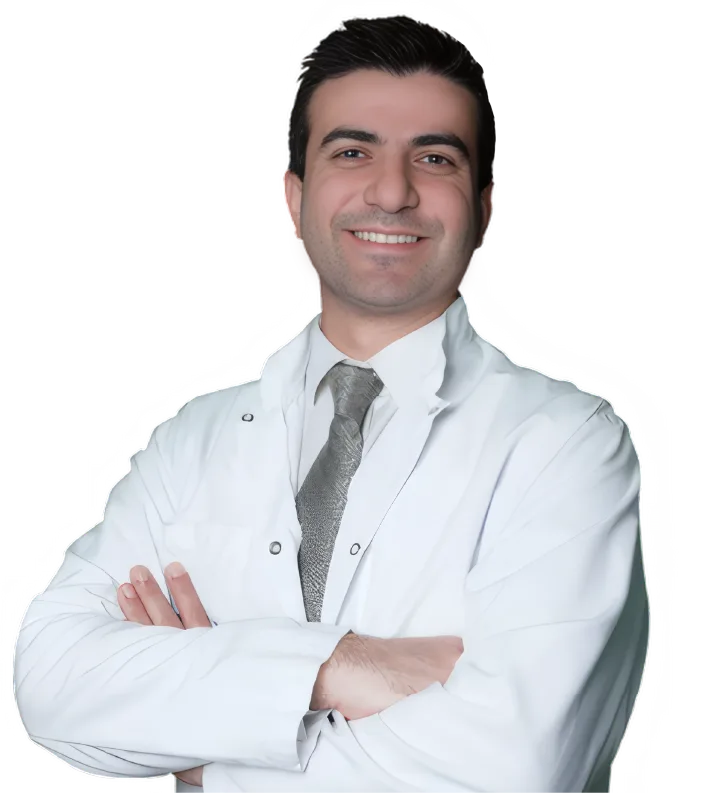
Doç. Dr. Osman Halit Çam
ENT & Head and Neck Surgery · Üsküdar, Istanbul
{ AI · pre-assessment }
onlineLet's talk about your face

AI responses are not a substitute for a medical diagnosis.
Facial aesthetics is not a single operation but an approach that reads each region of the face by its own type of ageing. The right procedure is chosen by region and by which layer has aged.
- Type
- Surgical + non-surgical
- Duration
- Variable
- Anesthesia
- Local / sedation / general
- Stay
- Same day or one overnight stay
- Recovery
- 7-14 days
Özet: Facial aesthetics is a whole-face assessment framework for understanding changes in the skin, soft tissue, volume, structural support and facial movement. Similar-looking concerns may involve different anatomical layers, so appearance alone cannot identify a suitable procedure. Mirror observation can help a person describe a concern but is not a diagnostic test or treatment-selection method. Any surgical or non-surgical option requires an individual physician examination, balanced discussion of limitations and risks, and an informed decision without time pressure.
Facial aesthetics is an anatomical and functional assessment of the forehead, brows, eyelids, midface, lower face, neck and lips. It is not a single operation or a predetermined sequence of treatments. Changes may involve one or several layers, and the relevance of any intervention depends on examination findings, general health, personal priorities and realistic expectations.
Table of Contents
This article explains how facial regions and tissue layers can be discussed without turning personal observation into self-diagnosis. It covers consultation, recovery, surgical and non-surgical categories, combined planning, functional considerations and common questions. Procedure names and links are provided for neutral subject navigation; they do not indicate that a particular treatment is suitable.
- How the face ages: layer-by-layer change
- How to Read Your Own Face
- Region-by-region approach map
- Region, concern, approach and page
- The Approach by Decade
- When it makes sense to consult a specialist
- What to Expect at Your First Consultation
- Recovery varies by procedure
- Surgical or non-surgical: the decision logic
- The combined planning approach
- The natural-result philosophy
- Facial Aesthetics for Men
- An ENT-rooted perspective on facial surgery
- For international patients
- Frequently Asked Questions
- References
How the face ages: layer-by-layer change
Facial ageing is a variable process involving the skin, fat compartments, connective tissues, muscles and supporting facial skeleton. These layers may change at different rates and in different combinations. A visible line, fold or contour change therefore does not reveal its cause by itself, and age alone cannot determine whether any procedure is appropriate.
The skin is the most superficial layer. Changes in collagen and elastin, together with sun exposure, smoking, air pollution, sleep patterns and stress, may be associated with differences in texture, thickness and visible lines. The contribution of each factor is not identical in every person, and surface appearance cannot show the condition of deeper structures.
Facial fat is distributed in compartments rather than as one uninterrupted layer. Changes in volume and position may alter the temples, cheeks or lower-face contours. A flatter or heavier-looking region can reflect more than one anatomical process; describing the visible concern does not establish whether volume, support, skin or another feature is principally involved.
The orbital rim, cheekbone and jaw provide structural support for the overlying tissues. Connective tissues and the superficial musculoaponeurotic system (SMAS) also contribute to facial position and movement. Changes in these structures may be relevant to contour, but their importance can be assessed only in relation to the rest of the face.
Two people of the same age may consequently show different patterns. Genetics, facial structure, skin characteristics, lifestyle, health history and previous procedures can all influence appearance. The useful clinical questions are which regions contribute to the concern, how they interact, and whether observation, non-surgical care or surgery should be discussed after examination.
How to Read Your Own Face
Looking in a mirror can help a person identify and describe a region of concern, but it is preparation for a consultation rather than screening, measurement or diagnosis. The face may be observed at rest and during natural expression without pulling or repositioning the skin. Interpretation of tissue quality, structural support and function belongs to physician examination.
Begin by noting whether the concern appears mainly in the upper, middle or lower face. In the upper face, the brow and upper eyelid are neighbouring structures, so perceived eyelid heaviness cannot automatically be attributed to one of them. Around the eyes, appearance should also be considered alongside normal eyelid protection and movement.
In the midface, cheek contour and the transition toward the lower eyelid or mouth may be described separately. Flattening, folds or asymmetry can have multiple possible contributors. A mirror cannot determine whether a visible change comes from volume distribution, tissue position, structural anatomy, lighting, facial expression or a combination of these factors.
For the lower face and neck, it may be helpful to describe jawline definition, the area beneath the chin and the relationship between the face and neck. These observations should remain descriptive. They do not establish which anatomical layer is responsible or whether an aesthetic intervention would offer an appropriate risk-benefit balance.
Lip observations may include shape, volume, movement and proportion relative to neighbouring features. Changes seen while speaking or smiling can differ from those visible at rest. Photographs, mirrors and online examples cannot substitute for examination, and another person’s treatment plan cannot be transferred directly to different anatomy.
Region-by-region approach map
A region-by-region map is a way to organise questions, not a system for choosing procedures. Each region contains several tissue layers and performs aesthetic or functional roles. The summaries below explain what a physician may evaluate. They deliberately avoid converting a visible feature into a treatment recommendation or implying that intervention is necessary.
Lower face and jowls
Lower-face assessment may consider jawline contour, soft-tissue position, skin characteristics, facial movement and neighbouring neck anatomy. Similar appearances can arise from different combinations of these features. The physician may discuss observation, non-surgical categories or surgical categories, including their limitations and risks, without assuming that a visible concern requires treatment.
Neck
Neck assessment may include the skin, soft-tissue distribution, platysma, chin–neck relationship and interaction with the lower face. A perceived contour change does not identify its anatomical basis. Any discussion of neck procedures must account for individual anatomy, general health, healing considerations, anesthesia where applicable, possible complications and the limits of the expected change.
Eye area
Eye-area assessment considers upper- and lower-eyelid anatomy, surrounding volume, brow position, movement and eyelid protection. A tired appearance is subjective and is not a diagnosis. If an intervention is discussed, its possible aesthetic effect must be considered together with functional protection, healing variability, asymmetry and procedure-specific risks.
Forehead and brow
Forehead and brow assessment examines position at rest, movement during expression, eyelid relationships and individual facial proportions. Lines or apparent heaviness do not establish a single cause. Non-surgical and surgical categories have different mechanisms, limitations and risks; neither category can be selected reliably through mirror observation or photographs alone.
Midface
Midface assessment may examine cheek contour, volume distribution, soft-tissue position and transitions to the lower eyelid and mouth. More than one layer may contribute to the same appearance. The distinction between volume-related and position-related change is made during examination rather than inferred from a fold, shadow or photograph.
Lips
Lip assessment includes shape, movement, volume, surrounding skin and proportion relative to the nose and chin. Concerns that sound similar may involve different anatomical features. A physician can explain whether observation or a treatment category might be considered, together with reversibility limits, healing uncertainty, functional considerations and potential complications.
Non-surgical approaches
Non-surgical approaches include categories directed toward facial movement, selected volume concerns or skin quality. They are not interchangeable and do not reproduce every possible surgical change. Their effects, limitations, duration and risks vary by product, technique and individual factors. Prescription or treatment changes should not be made without the treating physician’s guidance.
Region, concern, approach and page
This table is a neutral index of facial regions, descriptive concerns and subjects a physician may evaluate. It is not a symptom-to-procedure matching tool. A listed page explains a procedure category associated with that anatomical region, but the link does not indicate candidacy, need or likely outcome. Those questions require an individual examination.
| Region | Descriptive concern | What a physician may evaluate | Related subject page |
|---|---|---|---|
| Lower face | Jawline or lower-face contour | Skin, soft tissue, support, movement and neighbouring regions | Facelift |
| Neck | Contour beneath the chin or neck | Skin, soft tissue, platysma and face–neck relationship | Neck lift |
| Eye area | Eyelid contour or surrounding fullness | Eyelid anatomy, volume, brow relationship and protection | Eyelid surgery |
| Forehead and brow | Position or expression-related change | Resting position, movement, eyelid relationship and proportion | Brow lift |
| Midface | Cheek contour or facial transition | Volume distribution, tissue position and structural support | Cheek lift |
| Lips | Shape, volume, movement or proportion | Lip anatomy, surrounding tissues and neighbouring features | Lip aesthetics |
| Skin and expression | Texture, lines or volume-related concern | Skin quality, facial movement, anatomy and treatment limitations | Fillers and botox |
The Approach by Decade
Decades are broad descriptive categories rather than treatment schedules or thresholds. People of similar ages may have substantially different facial anatomy, skin characteristics and priorities. A decade-based discussion can provide context for how concerns are described, but it cannot predict the relevant tissue layer, establish candidacy or determine when treatment should occur.
In earlier adult decades, a person may notice skin texture, expression-related lines, inherited eyelid features or differences in facial volume. These observations do not necessarily represent ageing that requires intervention. Structural features may have been present for years, while changes attributed to age may also reflect lighting, weight variation, health or previous treatment.
In middle adult decades, differences among facial regions may become more noticeable. Brow position, eyelid contour, cheek shape, folds and jawline definition can change independently or together. The distinction between surface quality, volume distribution and tissue position remains clinical; age does not make any particular procedure automatically suitable.
In later adult decades, concerns may involve several regions or layers, but this still does not create a rule in favour of surgery. General health, medications, tissue characteristics, functional needs, expected benefit, recovery capacity and personal preference remain relevant. Observation without treatment can remain an appropriate outcome of assessment at any age.
When it makes sense to consult a specialist
A physician consultation may be considered when a person wants a neutral explanation of a persistent concern, cannot distinguish among possible contributing layers, or wants to understand the limitations and risks of available categories. Seeking information does not imply that treatment is needed, and an assessment may conclude that observation is appropriate.
The consultation should not be treated as a response to a supposed age deadline or diminishing opportunity. Facial ageing does not follow one universal timetable. A person may seek information because of a longstanding structural feature, a gradual change, previous treatment, weight change or uncertainty about how different regions interact.
Descriptive concerns may involve the eyelids, brows, cheeks, jawline, neck, lips, skin quality or expression. None of these observations identifies a diagnosis or procedure by itself. The physician’s role is to review relevant anatomy, function, health history and expectations while explaining uncertainty rather than converting a list of features into a treatment plan.
Previous filler, botulinum toxin or facial surgery should be disclosed during assessment because earlier interventions can affect examination and planning. Medication use, smoking, allergies and other health information may also be relevant. Medication must not be stopped, reduced or changed without guidance from the treating physician.
What to Expect at Your First Consultation
The first consultation is an information-gathering and examination process rather than an obligation to proceed. It generally brings together the person’s concerns, medical and procedural history, regional facial assessment, functional considerations and discussion of possible options. A suitable decision requires understandable information about limitations, uncertainty, recovery and risk without time pressure.
The conversation may cover systemic illnesses, medication use, allergies, smoking, previous operations and any history of injectable treatment. This information can affect whether an intervention is appropriate and how risk is assessed. The face is then considered by region and as a whole so that neighbouring structures are not interpreted in isolation.
Assessment may address skin characteristics, volume distribution, tissue position, facial movement and proportion. Function is considered where relevant, particularly breathing and eyelid protection. Standard clinical photographs may support documentation and proportional review, but photographs are not diagnostic tests and cannot replace direct examination.
People can explain their priorities in their own words or use visual references to clarify a preference. A reference image does not predict a transferable result because anatomy, healing and treatment history differ. Discussion should include the option of no treatment as well as the potential limitations and risks of any proposed approach.
Surgery and invasive procedures can involve anesthesia-related issues, healing problems, complications and unwanted aesthetic or functional outcomes. Non-surgical procedures also have limitations and potential adverse effects. The precise risk profile depends on the intervention and individual health, and it should be discussed before informed consent.
Aesthetic treatment cannot guarantee a particular appearance or reliably resolve broader personal distress. Planning is better grounded when the concern is specific and expectations allow for normal asymmetry, biological variation and continued ageing. If priorities remain uncertain, postponing a decision is a valid outcome of consultation.
Recovery varies by procedure
Recovery is an individual biological process shaped by the procedure, treated region, health status, tissue characteristics and aftercare plan. Returning to routine activities is not the same as complete healing or a final result. No universal recovery timetable can be inferred from a procedure name, and personalised instructions must come from the treating physician.
| Procedure group | General recovery pattern | Points requiring individual discussion |
|---|---|---|
| Botulinum toxin or filler | Local changes may occur after treatment | Adverse effects, activity guidance and when to seek assessment |
| Skin-focused procedures | Recovery depends on treatment depth and skin response | Skin care, exposure precautions and healing variation |
| Eyelid surgery | Swelling or bruising may affect appearance during healing | Eyelid protection, activity limits and procedure-specific complications |
| Brow procedures | Healing varies with technique and individual factors | Swelling, sensation, scars and functional or aesthetic concerns |
| Facelift procedures | Tissue settling continues beyond initial activity resumption | Healing, scars, asymmetry, nerve-related concerns and anesthesia risk |
| Neck procedures | Recovery reflects the structures treated and the operative plan | Support, movement, healing and procedure-specific complications |
Smoking, blood-pressure control, medication use and individual health can influence perioperative planning and recovery. Blood-thinning or other prescribed medication must not be stopped or adjusted independently. Preparation, wound care, activity, travel and follow-up instructions are determined by the treating physician for the specific procedure.
Swelling, bruising and changing contour can make early appearance difficult to interpret. The course differs from person to person, and no exact completion point or result can be promised. Concerns during recovery should be assessed according to the clinician’s instructions rather than compared with another patient’s photographs or timetable.
Benefits must be weighed against limitations, healing uncertainty, anesthesia where applicable, possible complications and the chance of an unwanted aesthetic or functional outcome. If symptoms are severe or rapidly worsening, a healthcare facility should be contacted without delay.
Surgical or non-surgical: the decision logic
Surgical and non-surgical procedures are distinct categories with different mechanisms, limits and risk profiles. The choice cannot be reduced to age, one visible feature or a preference for shorter recovery. A physician assesses anatomy, function, health, previous treatment, expectations and whether the likely benefit justifies the burdens and risks of intervention.
Botulinum toxin affects selected muscle activity, filler changes selected volume relationships, and skin-focused procedures address surface characteristics. Surgical procedures may alter deeper tissues. This anatomical description does not mean that a visible line, fold, contour or perceived descent necessarily requires the category associated with that layer.
Non-surgical treatment does not stop ageing, and it cannot reproduce every change associated with surgery. Surgery likewise does not eliminate every line, prevent future change or guarantee symmetry and natural appearance. Either category can produce adverse effects or dissatisfaction, and observation without treatment may be reasonable.
The decision process may be framed around several questions:
- Is the concern clearly described without assuming its anatomical cause?
- Does examination identify one region or several interacting regions?
- Are function, general health, medication and previous procedures relevant?
- What benefit is realistically possible, and what cannot be changed?
- What risks, recovery demands and uncertainties accompany the option?
- Would observation or postponing a decision better match the person’s priorities?
The combined planning approach
Combined planning means examining connected facial regions within one strategy; it does not mean that multiple procedures should be performed. The purpose is to understand how one region affects the appearance or function of another. Whether interventions are combined, staged or not performed depends on health, anatomy, priorities, cumulative risk and informed preference.
The brow and eyelid can influence each other visually, while the lower face and neck form a continuous anatomical transition. Considering these relationships may help avoid an isolated interpretation. It does not establish that both regions need treatment or that treating them together will produce a particular result.
Where more than one procedure is discussed, the potential convenience of one treatment period must be considered alongside longer operative exposure, anesthesia-related issues, recovery demands and the combined possibility of complications. A single-session plan is not inherently preferable to staged care, and neither approach is suitable for every person.
Rhinoplasty may also enter a broader facial discussion because nasal shape, proportion and breathing can interact with overall assessment. Any possible combination with eyelid, brow, face or neck surgery requires individual review. The decision should not be made from photographs or a predefined package of procedures.
The natural-result philosophy
A natural-result philosophy is a planning principle centred on identity, expression, function and proportion rather than a guaranteed outcome. “Natural” is subjective and cannot be promised. Anatomy, technique, healing, asymmetry and personal expectations all affect the result, while every intervention has limits and may produce unwanted aesthetic or functional change.
Changing one region can influence how neighbouring regions are perceived. More treatment is not inherently more appropriate, and volume addition does not substitute for every form of structural change. A proportionate discussion identifies the principal concern while acknowledging what the proposed method can and cannot reasonably address.
Preserving movement and avoiding an overtreated appearance may be planning goals, but those goals do not ensure a specific result. Surgical and invasive procedures carry recovery demands and potential complications; non-surgical procedures also have adverse-effect profiles and temporary or variable outcomes.
Results differ among individuals, and no method stops continued ageing. Normal asymmetry may remain, scars and healing can vary, and revision or further care may sometimes enter later discussion. These uncertainties belong in informed consent rather than being overshadowed by claims of balance, longevity or predictable naturalness.
Facial Aesthetics for Men
Facial aesthetics for men uses the same individual assessment of regions, layers, movement, function and health. Proportional preferences may differ among people, but there is no single masculine template. Brow position, jaw contour, facial hair, skin characteristics and expression can be relevant without automatically indicating a particular procedure or desired outcome.
An excessively elevated brow, uniformly smooth expression or generalised fullness may conflict with some personal preferences, but these observations are not universal standards. Planning should be based on the individual’s anatomy and stated priorities rather than assumptions about gender, age or what a male face should look like.
Beard distribution and possible scar visibility may be practical considerations when surgery is discussed. Eyelid contour, brow position, jawline, neck, skin quality and expression may also be assessed. Each intervention still requires consideration of limitations, healing, anesthesia where applicable, possible complications and functional effects.
The appropriate route is not to match a concern to a procedure at home. It is to describe the concern, review contributing regions and layers during examination, and discuss whether observation or any treatment category has a reasonable individual risk-benefit balance.
An ENT-rooted perspective on facial surgery
An ear, nose and throat and facial-surgery perspective considers appearance together with breathing, eyelid protection, expression, movement and connected regional anatomy. This describes a clinical framework rather than superiority over another discipline. The objective is to avoid separating an aesthetic request from functions that may be affected by examination, planning or intervention.
When nasal appearance or rhinoplasty is discussed, external form and breathing function may both be relevant. When eyelid surgery is considered, contour is reviewed alongside the protective role of the eyelids. Facial muscles, soft tissues and neighbouring regions can similarly be examined as interconnected structures.
This functional perspective does not remove the risks of surgery or make an aesthetic result predictable. Anesthesia-related issues, healing variability, possible complications and unwanted functional or aesthetic changes remain part of informed discussion. The balance differs according to health, anatomy and the planned intervention.
Plastic surgery and facial plastic surgery literature both contribute to the understanding of ageing, anatomy, healing and procedural decision-making. For an individual, however, general principles cannot replace direct examination or predict candidacy and outcome.
For international patients
For international patients, pre-travel communication can organise existing medical information and clarify questions, but it cannot confirm diagnosis, procedural suitability or a final plan. Travel should not be arranged around an assumed treatment outcome. Physical examination, individual risk assessment and sufficient provision for follow-up remain necessary before any invasive procedure is considered.
Clear photographs and a medical history may support preliminary communication, but images cannot show every tissue characteristic or functional issue. A remote exchange should therefore be understood as informational. It must not be presented as confirmation that surgery will occur after arrival or that multiple procedures can be combined safely.
After arrival, direct examination may lead to a different plan, postponement or no procedure. If treatment is considered, anesthesia, recovery demands, possible complications, follow-up access and the safety of return travel require individual planning. These considerations cannot be reduced to a standard itinerary, fixed stay or package.
Follow-up needs differ according to the intervention and the person’s health. Remote communication may support continuity, but it does not replace hands-on local assessment when that is clinically required. Travel timing, accommodation and procedure scheduling should not take priority over medical suitability or recovery safety.
Permanent surgical alteration of the nose-to-lip relationship is a distinct subject from temporary volume-related approaches. The lip lift page is retained as a neutral procedural reference, not as a recommendation or indication that the operation is appropriate for a particular concern.
Facial-aesthetics questions often concern scope, personal suitability, surgical and non-surgical categories, combined procedures, recovery and durability. The answers below provide general decision context without diagnosing a tissue layer or selecting treatment. Individual anatomy, function, health, medication use and previous procedures require direct physician assessment before any plan can be established.
References
No verified document-level source was supplied for the clinical claims in this draft. The American Society of Plastic Surgeons and American Academy of Facial Plastic and Reconstructive Surgery links are organisational homepages retained from the original text for transparency; they are not cited as evidence for a specific statement, recommendation or outcome.
This content is for informational purposes only; diagnosis and treatment require an in-person physician examination.
Frequently Asked Questions
What procedures fall under facial aesthetics?
Facial aesthetics is an umbrella subject covering surgical and non-surgical procedures involving facial regions. Examples include face, neck, eyelid, brow, cheek and lip procedures, as well as injectable or skin-focused applications. Inclusion in this category does not mean that any procedure is needed or suitable for a particular person.
Which treatment is right for me?
Treatment cannot be selected from age, a photograph or one visible concern. A physician evaluates skin characteristics, volume distribution, tissue position, facial movement, function, general health, medication use, previous procedures and expectations. The outcome may be a surgical discussion, a non-surgical discussion, observation or no treatment.
Should I choose a surgical or a non-surgical method?
Neither category is automatically preferable. They affect different anatomical features and carry different limitations, recovery demands and risks. The decision depends on examination findings, the scale of the desired change, health, prior treatment and whether the anticipated benefit justifies intervention. Observation remains a possible choice.
Can more than one procedure be done in the same session?
Combined planning may be discussed when regions are anatomically related, but suitability is individual. Potential convenience must be balanced against total procedural burden, anesthesia-related considerations, recovery capacity and combined risks. Some plans may be staged, changed after examination or not performed.
Can facial procedures be combined with nasal surgery?
Rhinoplasty may be discussed alongside other facial procedures, but a combined plan is not determined from appearance alone. Nasal breathing, overall health, anesthesia, procedural burden, recovery and possible complications must be considered. Direct examination may support combination, staging, postponement or no intervention.
How long do the results last?
Duration varies by treatment category, product where applicable, anatomy, technique, healing and continued ageing. Some effects are temporary, while surgical changes may be longer-lasting, but no precise duration or permanent result can be guaranteed. Individual outcomes and the need for future care cannot be predicted from a general article.
Can I assess my face at home?
A mirror or photograph can help identify the region a person wants to discuss, but it is not a screening test, objective measurement or diagnostic method. Home observation cannot determine the affected anatomical layer, procedural suitability, likely benefit or risk. Those questions require physician examination.
What happens at the first consultation?
The consultation generally includes discussion of concerns, medical and procedural history, medication review, regional examination, functional assessment where relevant and clinical photographs. Possible options, observation, limitations, recovery considerations and risks can then be discussed without pressure to proceed.
Procedures often evaluated together
-
Facelift
Repositioning lower-face and jowl descent through SMAS and deep plane facelift techniques, planned individually for patients in Istanbul.
-
Neck Lift
Neck aesthetic procedure that surgically tightens loosened neck skin, submental fat and the platysma muscle beneath the chin.
-
Eyelid Surgery
Surgical correction of upper eyelid skin excess, lower eyelid bags and fat pads — with the critical distinction between a heavy lid and a low brow (blepharoplasty).
-
Brow Lift
Surgical or non-invasive repositioning of sagging brows and the forehead region.
-
Cheek Lift
Repositioning of descended cheek fat and skin tissue in the midface region.
-
Lip Lift
Surgical shortening of the philtrum — the skin distance between the nose and the upper lip — for a permanent, structural correction.
-
Lip Aesthetics
Shaping lip volume, contour and symmetry with a natural-look principle.
-
Fillers & Botox
Non-surgical facial rejuvenation with dermal fillers and botulinum toxin — how each works and where each is used.





Schedule a Consultation
Your information reaches Assoc. Prof. Dr. Çam's clinic. A response is made within 24 hours.