Eyelid Surgery
Surgical correction of upper eyelid skin excess, lower eyelid bags and fat pads — with the critical distinction between a heavy lid and a low brow (blepharoplasty).
Doç. Dr. Osman Halit Çam
ENT & Head and Neck Surgery · Üsküdar, Istanbul

Eyelid Surgery — clinic video
{ AI · pre-assessment }
onlineLet's talk about your face

AI responses are not a substitute for a medical diagnosis.
Konuyla ilgili kısa videolar
Tüm videolar →Doç. Dr. Çam'ın YouTube kanalından bu konuyla ilgili kısa açıklamalar. Toplam 4 video.
-
Rhinoplasty + Lower Blepharoplasty

Rhinoplasty + Lower Blepharoplasty
Rinoplasti + Göz Torbası + Dudak Dolgusu
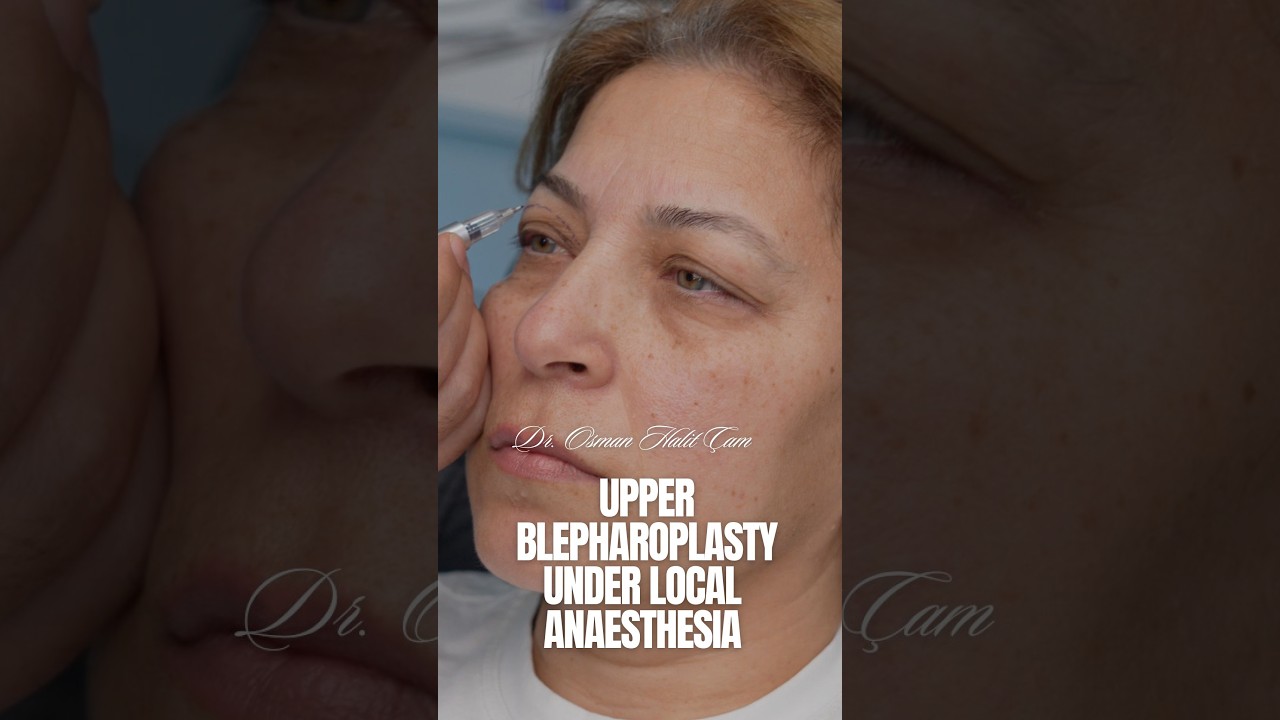
Lokal Anestezi ile Üst Göz Kapağı Estetiği
Eyelid surgery (blepharoplasty) corrects loose skin on the upper lid and fat-pad bags on the lower lid. The upper lid procedure can also widen a narrowed field of vision (functional). A key step is separating a heavy lid from a low brow.
- Type
- Aesthetic / functional surgery
- Duration
- 1-2 hours
- Anesthesia
- Local / sedation / general
- Stay
- Same day
- Recovery
- 7-10 days for social recovery, 4-6 weeks for the final result
Summary: Eyelid surgery, medically known as blepharoplasty, is an operation that addresses structural changes in the upper eyelid, lower eyelid, or both. Its scope may be aesthetic, functional, or a combination of the two. The assessment distinguishes eyelid skin excess from a descended brow and considers eye-surface health, eyelid support, fat distribution, and individual anatomy. Outcomes, scars, recovery, and durability vary from person to person.
Eyelid surgery is the surgical assessment and correction of excess skin, displaced fat pads, and selected muscle or support-tissue changes around the eyes. Upper- and lower-eyelid findings are evaluated separately because similar-looking concerns may arise from different anatomical structures and may require different planning.
Table of Contents
This page explains the scope of upper- and lower-eyelid surgery, the distinction between a heavy eyelid and a descended brow, the examination process, non-surgical alternatives, recovery, risks, and expectation management. The sections are intended to support an informed medical consultation rather than help readers select or plan a procedure independently.
- What is blepharoplasty, and who is it for?
- Upper eyelid blepharoplasty: skin excess and the field of vision
- Lower eyelid blepharoplasty: bags and fat pads
- Combined upper and lower lid: when are they planned together?
- Is it the lid or the brow? The critical distinction
- What is checked at examination?
- Relationship to the facelift and combined assessment
- What do non-surgical options achieve, and where is the limit?
- How does recovery progress?
- International patients: how the process works
- Managing expectations
- Frequently Asked Questions
- References
What is blepharoplasty, and who is it for?
Blepharoplasty is an eyelid operation planned according to structural findings around the eye rather than age or appearance alone. It may address upper-lid skin excess, lower-lid fat prominence, or both. Suitability depends on examination findings, general health, eye-surface condition, expectations, and whether the apparent heaviness originates from the eyelid or another region.
On the upper eyelid, the concern may involve skin folding over the natural crease or approaching the eyelashes. On the lower eyelid, forward-positioned fat pads, skin laxity, a tear-trough hollow, or reduced lid support may contribute to the appearance. Genetic anatomy can also make these changes noticeable at different stages of life.
Descriptions such as “tired” or “heavy” are subjective and do not identify the responsible structure by themselves. Examination is needed to distinguish among eyelid skin excess, true eyelid drooping, brow descent, volume loss, pigmentation, and other eye-area findings.
Upper eyelid blepharoplasty: skin excess and the field of vision
Upper eyelid blepharoplasty addresses clinically identified excess skin and, when appropriate, selected muscle or fat changes. The incision is generally positioned in relation to the natural eyelid crease, but scar visibility and healing vary. When skin overhang affects visual function, examination and objective visual assessment may help determine whether the concern has a functional dimension.
Excess upper-lid skin is called dermatochalasis. It may alter the visible crease, produce asymmetry, interfere with make-up application, or contribute to a sensation of eyelid heaviness. These complaints are not specific to one condition, so they should not be used for self-diagnosis.
A separate condition, ptosis, refers to drooping related to the position or lifting mechanism of the eyelid itself. Skin removal alone does not address every form of ptosis. The examination therefore considers both the amount of skin and the function and position of the eyelid.
Evidence concerning visual function applies to appropriately selected patients with documented findings. It should not be interpreted as a guarantee that upper-eyelid surgery will enlarge every patient’s visual field or produce a predetermined functional result.
Lower eyelid blepharoplasty: bags and fat pads
Lower eyelid blepharoplasty addresses structural findings such as prominent fat pads, selected skin excess, and the relationship between the lower lid and cheek. The operative route and treatment of fat are determined individually. Incisions may be placed on the inner lid surface or near the lash line, but neither approach guarantees an invisible scar or a particular cosmetic result.
Two established routes may be considered:
- The transconjunctival approach uses an incision on the inner surface of the lower eyelid and may be considered when external skin removal is not required.
- The subciliary approach uses an incision near the lower lash line and may be considered when access to skin and supporting structures is needed.
Fat may be reduced, preserved, or repositioned according to anatomy. The aim is not simply to remove as much tissue as possible; excessive removal can contribute to a hollow appearance. Repositioning may be considered where the relationship between a fat prominence and the tear trough is relevant, although the achievable change varies.
Under-eye darkness does not always originate from a fat pad. Pigmentation, visible vessels, shadowing, volume relationships, and skin quality may each contribute. Surgery addresses selected structural components and does not promise correction of every colour or shadow concern.
Combined upper and lower lid: when are they planned together?
Upper- and lower-eyelid surgery may be planned together when examination identifies separate indications in both regions and the combined scope is medically appropriate. Treating both areas is not automatically preferable. Anaesthesia, operative extent, eye-surface health, eyelid support, medical history, risks, and recovery requirements are considered before an individual plan is established.
The comparison below describes anatomical and planning differences; it does not match a symptom to a diagnosis or determine which procedure a person needs.
| Assessment point | Upper eyelid | Lower eyelid |
|---|---|---|
| Structures considered | Skin, crease, fat, eyelid position, brow relationship | Fat pads, skin, lid support, tear trough, lid-cheek relationship |
| Possible scope | Aesthetic, functional, or combined | Primarily structural and aesthetic, with functional support considerations |
| Surgical access | Usually related to the natural eyelid crease | Inner lid surface or an incision near the lash line |
| Scar discussion | Position, skin response, and individual healing are reviewed | External versus internal access and individual healing are reviewed |
| Planning question | Is the apparent excess from the lid, brow, or eyelid-lifting mechanism? | Is the concern related to fat, skin, support, volume, pigmentation, or several factors? |
Combining operations changes the extent of surgery and may affect anaesthesia planning, swelling, eye-surface symptoms, and follow-up needs. Potential benefits must therefore be discussed alongside risks such as bleeding, infection, asymmetry, scarring, eyelid-position change, eye-surface problems, eye injury, and visual complications.
Is it the lid or the brow? The critical distinction
A heavy-looking upper eyelid may reflect eyelid skin excess, brow descent, true ptosis, or a combination of structures. The distinction cannot be made reliably from a single symptom or photograph. Examination evaluates the brow in a neutral position and observes how its position influences the amount and distribution of apparent eyelid skin.
Brow descent can push tissue toward the upper eyelid and create pseudo-dermatochalasis, meaning apparent eyelid excess influenced by brow position. This does not automatically mean that a brow lift is required; it means that eyelid-only planning may not address every contributing structure.
During assessment, the brow and eyelid are examined both separately and in relation to each other. Manually changing brow position is one component of clinical assessment, not a home test or a stand-alone method for choosing surgery.
If brow position is overlooked, removing upper-lid skin may leave part of the original heaviness unchanged or alter the balance between the brow and eyelid. Conversely, brow treatment does not replace blepharoplasty when genuine eyelid findings are also present. The appropriate scope and likely limitations vary by anatomy.
What is checked at examination?
Eyelid examination assesses more than the amount of visible skin. It considers eyelid position and movement, brow position, lower-lid support, fat compartments, tear-trough anatomy, eye closure, symmetry, scars, eye-surface symptoms, medical history, and medication use. Additional evaluation may be requested when functional impairment or an eye condition is suspected.
The assessment may include:
- The distribution and quality of upper- and lower-lid skin
- Eyelid position, movement, closure, and symmetry
- Brow height and its relationship to the upper eyelid
- Lower-lid tone and support
- Fat-pad prominence and the lid-cheek transition
- Dry-eye symptoms, contact-lens use, allergies, and previous eye procedures
- Medical conditions and medicines that may influence surgery or healing
- The source of under-eye colour, shadow, or hollowing
- Whether additional objective eye or visual-function assessment is appropriate
Conditions affecting the eye surface, eyelid support, thyroid-related eye findings, intraocular pressure, or general health can alter planning. A relevant medical consultation may be requested before surgery. Prescription medicines, including blood-thinning treatment, must not be stopped, reduced, or changed without the prescribing physician’s advice.
Relationship to the facelift and combined assessment
Eyelid surgery is limited to structures around the eyes and does not directly correct cheek descent, jowls, neck laxity, or pronounced folds elsewhere on the face. When several facial regions are being assessed, the eyelids are considered within overall facial proportions. This does not mean that every identified change should be treated during the same operation.
A facelift concerns different anatomical regions and carries its own indications, limitations, risks, and recovery considerations. Combining it with eyelid surgery increases procedural scope and requires an individual assessment rather than an appearance-based rule.
Within a broader facial aesthetics assessment, the clinician may distinguish among changes arising from the eyelids, brow, mid-face, skin surface, and facial volume. The purpose is to identify which structure contributes to the concern and to explain what a proposed procedure can and cannot reasonably address.
What do non-surgical options achieve, and where is the limit?
Non-surgical options may modify selected concerns involving volume, muscle activity, skin texture, or superficial lines, but they do not reproduce the tissue changes of blepharoplasty. Their suitability and risks depend on anatomy and the product or method used. They should not be treated as universally safer substitutes for surgery or selected without medical assessment.
Depending on the finding, an assessment may consider:
- Hyaluronic acid filler for selected hollows or volume relationships
- Botulinum toxin for suitable expression-related lines
- Laser or chemical procedures for selected surface and texture concerns
- Energy-based applications for limited skin-quality or tightening aims
- Skin care for selected pigment or surface concerns
Each option has limitations and potential adverse effects. Filler around the eye, for example, is an invasive medical application and can cause complications; it is not an interchangeable answer to every under-eye hollow or bag. Energy-based and resurfacing procedures likewise cannot remove a prominent fat pad or substantial skin excess.
Where structural excess or support problems are present, non-surgical methods may provide limited or different changes rather than the same outcome as surgery. No method can guarantee a durable result, and ageing, anatomy, skin behaviour, and ongoing health factors continue to influence appearance.
How does recovery progress?
Recovery after blepharoplasty varies with the operative area, technique, anaesthesia, combined procedures, individual healing, and eye-surface condition. Swelling, bruising, discomfort, temporary visual disturbance, dryness, tearing, or tightness may occur. The timing of wound care, medication, activity changes, suture management, and review is set by the treating physician rather than a universal schedule.
Postoperative advice is personalised. Cold application and head elevation may be included in a physician’s plan, but the duration and frequency should follow the instructions provided for that operation. Artificial tears or other medicines should be used only as directed; persistent or changing symptoms require clinical assessment rather than unsupervised treatment changes.
Scars generally evolve over time, yet their colour, texture, and visibility cannot be predicted precisely. Residual swelling and tissue settling may also continue at different rates. A fixed “social recovery” or “final result” date is therefore not appropriate for every patient.
Factors such as smoking, blood-pressure control, pre-existing dry eye, previous procedures, and medicines can influence planning and recovery. Prescription treatment, including anticoagulant or antiplatelet medication, must not be stopped or adjusted without consultation with the prescribing physician.
Blepharoplasty also carries material surgical risks, including bleeding, infection, asymmetry, scarring, eye-surface disturbance, difficulty closing the eye, altered eyelid position, eye injury, and visual complications. Risk varies by patient and procedure, and no list replaces individual consent discussions. If symptoms are severe or rapidly worsening, a healthcare facility should be contacted without delay.
International patients: how the process works
For a person travelling for eyelid surgery, preliminary information exchange cannot replace an in-person examination. Photographs and medical history may help organise questions, but the definitive assessment, surgical scope, consent, and follow-up plan require direct evaluation. Travel timing should not be fixed around an assumed recovery schedule before the treating team has assessed individual needs.
Planning should account for:
- The need for a face-to-face eyelid, brow, and eye-surface examination
- Review of medical conditions, previous procedures, allergies, and medicines
- Informed discussion of alternatives, limitations, and surgical risks
- The treating physician’s requirements for postoperative observation and review
- Access to appropriate medical assessment after returning home
- The possibility that examination may change or defer the preliminary plan
Travel packages, remote images, or an expected length of stay should not determine medical suitability. Follow-up needs vary, and remote communication does not replace an examination when a complication or clinically significant change is suspected.
Managing expectations
Blepharoplasty can alter selected eyelid structures, but it cannot guarantee a particular expression, symmetry, scar appearance, recovery pattern, or duration of effect. The result depends on baseline anatomy, tissue behaviour, healing, ageing, health conditions, and the extent of surgery. A balanced decision includes possible benefits, limitations, alternatives, and material risks.
The operation does not directly change eye colour or every feature interpreted as a tired expression. It may not correct brow descent, pigmentation, vascular colour, cheek descent, or every tear-trough concern. Natural asymmetry may remain, and additional asymmetry can occur during healing or as a surgical outcome.
Tissue removal must be planned conservatively because excessive skin or fat removal may contribute to difficulty closing the eye, lower-lid malposition such as ectropion, dryness, or a hollow appearance. Conservative planning reduces neither the need for informed consent nor the possibility of complications.
Useful preoperative information includes:
- Existing dry-eye, tearing, irritation, or allergy complaints
- Contact-lens use and previous eye or eyelid procedures
- Medicines and supplements
- Smoking and relevant medical conditions
- The specific feature causing concern
- The change expected and the outcomes that would not be acceptable
No aesthetic or functional outcome can be guaranteed. The likely course and durability are individual, while ageing and tissue change continue after surgery.
These answers address common decision-making questions without determining personal suitability. Scar behaviour, return to work, combined surgery, brow position, dry-eye symptoms, and durability depend on individual anatomy and the planned operation. A physician examination is required to relate these issues to a particular person and to discuss procedure-specific risks.
References
The documents below address blepharoplasty techniques, preoperative assessment, dry-eye considerations, complications, and visual-function research. Findings from individual studies or reviews apply within their own patient groups and methods; they should not be interpreted as universal outcome guarantees or as substitutes for personalised examination and informed consent.
- Blepharoplasty: An Overview — PMC
- Cosmetic blepharoplasty and dry eye disease: incidence, mechanisms and prevention — PMC
- Complications of Blepharoplasty: Prevention and Management — PMC
- Effects of upper lid blepharoplasty on visual quality in dermatochalasis — PMC
This content is for informational purposes only; diagnosis and treatment require an in-person physician examination, and surgical outcomes vary from person to person.
Frequently Asked Questions
Will there be a visible scar?
Upper-lid incisions are generally planned in relation to the natural crease, while lower-lid access may be through the inner surface or near the lash line. These positions may help camouflage an incision, but they do not guarantee that a scar will be invisible. Scar colour, texture, maturation, and visibility vary among individuals.
When can I return to work after eyelid surgery?
There is no universal return-to-work interval. The appropriate timing depends on the extent of surgery, swelling, bruising, visual comfort, medication use, job demands, and the treating physician’s assessment. Work involving driving, machinery, physical strain, or public-facing duties may require different planning. Driving should be avoided whenever vision is affected or sedating medication is being used.
Are the upper and lower lids treated together?
They can be planned together when separate findings in both regions support a combined operation and the overall scope is appropriate. They can also be treated separately. The decision considers anatomy, eye-surface health, lower-lid support, anaesthesia, medical history, risks, expectations, and follow-up rather than convenience alone.
Is it the lid or the brow — how is this decided?
The distinction is made during examination by evaluating eyelid skin, eyelid position, brow position, and how these structures interact. A descended brow may contribute to apparent eyelid heaviness, while genuine eyelid skin excess or ptosis may coexist. A mirror check or photograph cannot reliably determine which structure should be treated.
Does eyelid surgery cause dry eye?
Dry-eye symptoms can occur or change after blepharoplasty, but their likelihood, severity, and course are not the same for everyone. Existing eye-surface symptoms, eyelid closure, surgical extent, and other factors are assessed beforehand. New, persistent, or worsening complaints require clinical review; prescription treatment should not be changed without medical advice.
How long does the result last?
A fixed duration cannot be promised. Removed tissue, repositioned structures, ongoing ageing, brow position, skin behaviour, health factors, and healing all influence how the result changes over time. Surgery does not stop ageing, and neither a permanent result nor freedom from future treatment can be guaranteed.
Procedures often evaluated together
-
Brow Lift
Surgical or non-invasive repositioning of sagging brows and the forehead region.
-
Facelift
Repositioning lower-face and jowl descent through SMAS and deep plane facelift techniques, planned individually for patients in Istanbul.
-
Facial Aesthetics
A whole-face approach that reads each region on its own — matching the right surgical or non-surgical procedure to the right area.





Schedule a Consultation
Your information reaches Assoc. Prof. Dr. Çam's clinic. A response is made within 24 hours.