Pediatric ENT
Mouth breathing, snoring, frequent ear pain, hearing difficulty or recurrent throat infections in a child — which symptom points to which problem? A parent's guide that routes each sign to the right page.

Doç. Dr. Osman Halit Çam
ENT & Head and Neck Surgery · Üsküdar, Istanbul
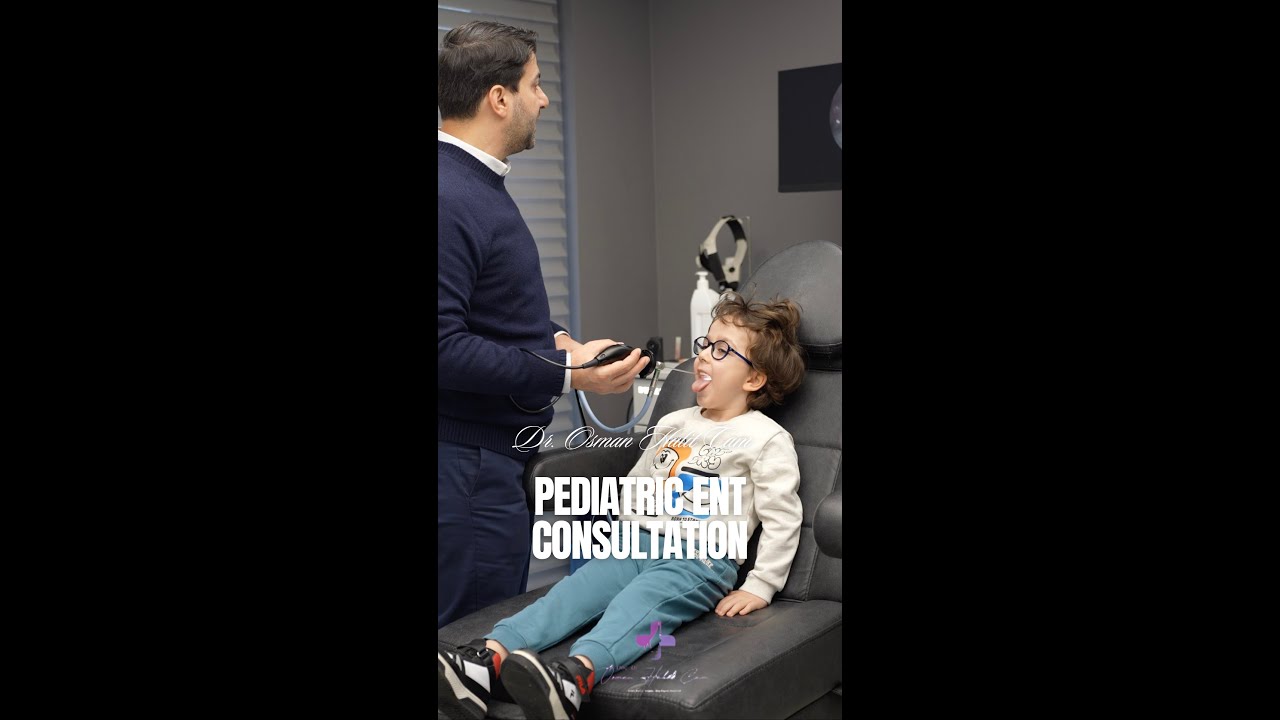
Pediatric ENT — clinic video
{ AI · pre-assessment }
onlineLet's talk about your child

AI responses are not a substitute for a medical diagnosis.
Konuyla ilgili kısa videolar
Tüm videolar →Doç. Dr. Çam'ın YouTube kanalından bu konuyla ilgili kısa açıklamalar.
-
Çocuk KBB Muayenesi
In children, persistent mouth breathing and snoring often point to the adenoids, frequent ear pain and hearing difficulty to the middle ear, and recurrent feverish throat infections to the tonsils. Most conditions are assessed and followed medically before surgery is considered.
- Type
- Pediatric, mixed
- Duration
- Variable
- Anesthesia
- General
- Stay
- Usually same-day
- Recovery
- 7-10 days
Özet: Pediatric ENT is the area of medicine concerned with childhood ear, nose, throat, hearing, voice, airway and related head-and-neck conditions. Symptoms such as mouth breathing, snoring, ear discomfort, hearing changes or recurring throat complaints can arise from several overlapping situations and do not identify a diagnosis on their own. This page explains how observations can support a clinical assessment, what an examination may involve and how families can participate in individual decisions. Treatment and follow-up depend on the child’s examination findings, functional needs and overall health.
Pediatric ENT is an age-specific field that evaluates ear, nose, throat, airway, hearing, voice and related conditions in children. Because anatomy, communication skills and development change throughout childhood, assessment considers the child’s symptoms together with sleep, hearing, speech, growth, behaviour and participation in daily activities.
Table of Contents
This page follows the questions families may encounter from initial observation through clinical assessment and shared decision-making. The sections distinguish home observations from medical testing, explain why symptoms may overlap and describe how examination findings are interpreted. The links below provide navigation within the article rather than a diagnostic sequence.
- Why Pediatric ENT Differs From Adult ENT
- Symptom-Based Routing: Which Sign Points to Which Problem
- How Urgent Is Each Symptom?
- What to Observe and Record at Home
- What a Child’s ENT Examination Is Like
- Other Common Conditions and Risk Factors
- Treatment Approaches: Medical First, Surgical When Necessary
- The Surgery Decision and the Family’s Role
- The Effect on Breathing, School and Development
- For International Patients
- General Principles of the Approach in Pediatric ENT
- Frequently Asked Questions
- References
Why Pediatric ENT Differs From Adult ENT
Children need an age-sensitive assessment because their anatomy, developmental stage and ability to describe symptoms differ from those of adults. A visible anatomical finding does not determine its clinical importance by itself. The clinician considers how the finding relates to breathing, sleep, hearing, communication, eating, growth and everyday function.
Structures involved in nasal breathing, throat function and middle-ear ventilation change as a child grows. These developmental differences can influence how symptoms appear and how examination or hearing-test results are interpreted. A complaint that is easy for an adult to describe may instead appear in a child as a change in sleep, speech, listening or classroom participation.
Childhood exposure to respiratory infections is common, particularly when children begin spending time in group environments. Frequency alone does not establish an ear, nose or throat disorder. The pattern, associated effects, recovery between episodes, examination findings and the child’s general health all contribute to the clinical interpretation.
The same anatomical appearance can also have different implications for different children. An enlarged structure may have little functional effect in one child but coincide with disturbed breathing, swallowing or sleep in another. Conversely, significant symptoms may require assessment even when a family cannot see an obvious physical change.
An age-specific evaluation may therefore consider:
- How the child breathes while awake and asleep.
- Whether hearing or communication appears to have changed.
- Whether eating, swallowing or sleep is affected.
- How symptoms vary during infections or allergy periods.
- Whether the concern interferes with school, play or daily routines.
- What previous examinations, tests and treatments have shown.
Symptom-Based Routing: Which Sign Points to Which Problem
A symptom cannot reliably identify one childhood condition because several anatomical, infectious, allergic, functional or developmental situations may produce similar observations. The table is a preparation aid for discussing the child’s history with a clinician. It does not rank diagnoses, replace examination or instruct families to choose a treatment page.
| Observation reported by the family | Situations a clinician may evaluate | Related context |
|---|---|---|
| Mouth-open breathing, snoring or difficulty using the nose | Nasal airflow, temporary congestion, allergy-related changes, tissue enlargement and other forms of obstruction | Adenoid hypertrophy |
| Ear discomfort, touching the ear, changes in listening or increased television volume | Ear canal and eardrum findings, middle-ear ventilation, fluid, infection and hearing function | Otitis media in children |
| Recurring throat discomfort, fever during some episodes or swallowing complaints | Throat and tonsil findings, infection patterns, inflammation and non-infectious irritation | Tonsillitis |
| Noisy or disrupted sleep and changes noticed during breathing | Nasal and throat airflow, sleep history, tonsil and adenoid findings, and other sleep-related factors | Assessed in the child’s full clinical context |
| Persistent congestion, nasal discharge, sneezing or eye symptoms | Infection, environmental exposure, allergy-related inflammation and other nasal conditions | Assessed during examination |
| Speech, language or listening concerns | Hearing function, middle-ear status, speech development and other developmental considerations | Age-appropriate assessment may be considered |
Mouth breathing and snoring may occur with temporary congestion, allergy-related inflammation, anatomical narrowing, enlarged tissues or a combination of factors. Observation alone cannot determine which factor is relevant or whether treatment is needed. The child’s daytime breathing, sleep pattern, nasal examination and overall history help the clinician make that distinction.
Ear discomfort and changes in listening also have multiple possible explanations. A child may not describe pressure, altered sound clarity or pain in adult terms. Examination of the ear and, where appropriate, age-suitable hearing evaluation can help distinguish temporary findings from concerns that merit continued clinical review.
Recurring throat complaints can differ in timing, associated symptoms and effect on swallowing or daily function. A family diary may help clarify this pattern, but the diary does not confirm whether individual episodes involve the tonsils or another cause. Clinical records and examination findings are interpreted together.
Symptoms may overlap without sharing a single explanation. Mouth breathing, disturbed sleep, listening difficulty and recurrent infections can occur in the same child, yet each observation still requires contextual assessment. For this reason, the ears, nose, mouth, throat, hearing and airway may be considered as connected parts of one functional system.
How Urgent Is Each Symptom?
Urgency cannot be determined safely from a symptom label or online checklist alone. It depends on the child’s overall condition, the severity and progression of the problem, relevant medical history and direct clinical assessment. Families should not use the table below as a triage test or as permission to postpone care.
| Type of concern | What can be prepared for an assessment | Limitation of home interpretation |
|---|---|---|
| Ongoing nasal or sleep-related observations | When the pattern occurs and how it affects sleep or daytime function | A recording or description cannot determine the cause or severity |
| Ear or hearing-related observations | Changes in listening, communication and previous test results | Behaviour alone cannot confirm fluid, infection or hearing loss |
| Throat or swallowing-related observations | Episode notes, previous examinations and medicines used | Similar complaints may have different causes |
| Nosebleed or nasal blockage concerns | Pattern, relevant injuries, medical history and clinician records | Home observation cannot establish the underlying condition |
| A rapid change in the child’s condition | A concise account of what changed and relevant health information | Online guidance cannot replace timely in-person assessment |
Belirtiler ağırsa veya hızla kötüleşiyorsa gecikmeden bir sağlık kuruluşuna başvurulur.
Family observations can still be useful when presented as history rather than self-triage. A clinician can interpret them alongside the child’s appearance, vital clinical information, examination findings and relevant tests. Uncertainty itself may be discussed with a healthcare professional; families do not need to identify the anatomical source before seeking assessment.
What to Observe and Record at Home
Home observations can help describe patterns that may not be present during an appointment, but they are neither screening nor objective measurement. Their purpose is to prepare a clearer clinical history. Recording should never delay medical care, disturb the child or be treated as evidence that confirms or excludes a condition.
Useful observations may include:
- Whether a concern is continuous or varies with colds, seasons or environment.
- Whether sleep, eating, listening, speaking, play or school participation changes.
- What a healthcare professional previously observed during an episode.
- Which medicines are currently used and who prescribed them.
- Whether the child has known allergies or relevant medical conditions.
- Which reports, hearing assessments or imaging results are already available.
A short recording of sleep-related noise or movement may sometimes help a clinician understand what a family has noticed. It should be obtained only when this can be done safely and without changing the child’s position or delaying care. The recording is contextual information; it is not a sleep test and cannot measure airflow or establish a diagnosis.
An episode diary can include:
- The approximate date and nature of the complaint.
- Changes in sleep, swallowing, listening or communication.
- Whether the child was examined by a healthcare professional.
- Medicines prescribed or used, without changing them independently.
- Effects on attendance and normal daily activities.
- Questions the family wants to discuss during the examination.
Everyday listening observations may include asking for repetition, changing device volume, turning toward a sound or appearing to misunderstand spoken instructions. Such behaviours can have different explanations. They do not demonstrate hearing loss and cannot replace an age-appropriate hearing assessment.
Previous reports, current medicine information and allergy history can be brought to the consultation. Prescribed medicines should not be stopped, reduced or changed without consulting the clinician responsible for the child’s care. If a teacher or speech-language professional has relevant observations, a concise note may add context without being treated as a diagnostic report.
What a Child’s ENT Examination Is Like
A childhood ear, nose and throat assessment combines conversation, observation and an age-appropriate physical examination. Additional tests are selected only when clinically relevant. Some children may experience discomfort, anxiety or difficulty cooperating, and no examination or endoscopic procedure can be promised to be entirely painless for every child.
The assessment may include:
- Clinical history: The clinician asks about onset, pattern, previous episodes, current medicines, allergy history, sleep, listening, speech, swallowing and effects on everyday function.
- Physical examination: The accessible parts of the ears, nose, mouth and throat are examined using suitable instruments.
- Endoscopic assessment: If clinically indicated, a flexible instrument may be used to view areas that cannot be assessed adequately by routine inspection. Possible discomfort and the reason for the procedure should be explained.
- Audiological assessment: A hearing professional may choose methods appropriate to the child’s developmental stage and ability to participate.
- Further assessment: Sleep-related evaluation or imaging may be considered when the history and examination justify it.
Not every child needs every component. Imaging is not automatically required for common complaints, and its potential value is weighed against the child’s needs and the characteristics of the examination. The clinician may adapt the order, pace and communication style according to the child’s age and comfort.
Young children may find unfamiliar equipment or close examination unsettling. Explaining each step in simple language, allowing appropriate pauses and involving a parent can support cooperation. These measures may make the experience more manageable, but they do not guarantee the absence of distress or discomfort.
How to Prepare for the First Examination
The child can be told in neutral language that a healthcare professional will look at and discuss the ears, nose and throat. Frightening predictions and promises that nothing will feel uncomfortable are both best avoided. Families can prepare reports, medicine information, allergy details, observations and questions in advance.
A familiar object may help some children feel more settled. Parents can also tell the clinician about previous difficult examinations, sensory sensitivities, communication needs or medical experiences. This information allows the assessment to be adapted without assuming that every procedure will be necessary or completed at one visit.
Other Common Conditions and Risk Factors
Childhood ear, nose and throat complaints are not limited to adenoid, middle-ear or tonsil conditions. Hearing changes, allergy-related symptoms, voice concerns and developmental differences may be considered among several possibilities. Risk factors contribute context, but none of them independently proves what is causing a child’s symptoms.
Hearing concerns may appear as inconsistent responses, changes in speech clarity, increased listening effort or classroom difficulty. Possible explanations include temporary middle-ear changes, ear-canal problems, inner-ear conditions, attention, language development and the listening environment. Objective hearing assessment may be needed to distinguish among these possibilities.
Persistent or recurring hoarseness can be associated with voice use, inflammation, allergy-related irritation, reflux-related factors or structural changes. The relevance of each possibility depends on the child’s history and examination. A family should not infer the cause from voice quality alone.
Factors a clinician may consider include:
- Age-related anatomy of the Eustachian tube and upper airway.
- Exposure to circulating infections in group settings.
- House dust, pollen, animal dander or other environmental exposures.
- Exposure to tobacco smoke, which has been associated with childhood ear and respiratory concerns.
- Personal or family history involving allergy, hearing or recurring ear complaints.
- Possible reflux-related irritation considered within the broader clinical picture.
- Communication, learning or sensory needs that may change how symptoms are expressed.
These factors do not form a home risk score. An association does not mean that a factor caused the problem in an individual child, and the direction or importance of the relationship may differ. The clinician uses this information to interpret the history and decide whether examination, objective testing or follow-up is appropriate.
Environmental changes or medicines should not be treated as universal solutions based only on a suspected risk factor. Where prescription treatment is already being used, any change should be discussed with the responsible clinician.
Treatment Approaches: Medical First, Surgical When Necessary
Treatment is individualized rather than governed by a universal “medical first” sequence. Depending on the child’s condition, options may include observation, medical care, supportive measures, further testing or procedural assessment. The appropriate choice depends on clinical findings, severity, functional impact, underlying cause and the risks of intervention or delay.
The presence of a symptom does not by itself determine treatment. For example, similar sleep, ear or throat complaints may require different approaches because their causes, examination findings and effects on the child are not identical. Likewise, an anatomical finding does not automatically require medication or surgery.
When medical care is considered, the selected treatment should correspond to the clinician’s assessment rather than a family’s presumed diagnosis. Prescription medicines, including nasal treatment or antibiotics, must be used according to professional advice. They should not be started, stopped, reduced or substituted without consultation.
When a procedure is discussed, potential benefits must be considered alongside anesthesia, bleeding, pain, infection, recovery and condition-specific risks. Results and recovery cannot be guaranteed. The expected course varies with the procedure, the child’s health, the underlying problem and individual response.
The detailed indications, procedural steps and recovery instructions belong to an individualized clinical discussion. General online content cannot decide whether intervention is appropriate, and it should not be used to compare options without examination.
This content is for informational purposes only; diagnosis and treatment require a physician examination. Treatment outcomes and recovery vary from child to child.
The Surgery Decision and the Family’s Role
A surgical decision is shared with the family after the child’s symptoms, examination findings, test results, daily function and alternatives have been considered together. Tissue size or one reported symptom is not enough to decide. The discussion should address expected benefits, uncertainties, material risks and what observation would mean.
Relevant considerations may include:
- The documented pattern and effect of the child’s complaints.
- Examination findings and the reliability of available tests.
- Breathing, sleep, swallowing, hearing and communication.
- Growth, attendance, participation and daytime function.
- Relevant medical conditions and anesthesia considerations.
- Available non-surgical or observational alternatives.
- The family’s questions, preferences and ability to continue follow-up.
A previous decision to observe does not guarantee that observation will always remain appropriate. Similarly, a discussion about surgery does not oblige a family to proceed. Clinical circumstances may change, and reassessment can alter the balance between possible benefit, uncertainty and risk.
Questions that may support informed discussion include:
- What specific clinical problem is the proposed procedure intended to address?
- Which examination or test findings support the recommendation?
- What alternatives remain appropriate for this child?
- What are the relevant anesthesia, bleeding, pain, infection and recovery risks?
- Which symptoms might have another cause and therefore remain unchanged?
- How will follow-up be arranged?
- If several procedures are discussed, what is the separate justification for each?
More than one procedure should not be added merely for convenience. If combined intervention is considered, each component requires an individual clinical reason and informed agreement. Combining procedures can also introduce different risks, so the balance must be explained for the particular child rather than presented as a general advantage.
A second opinion may help a family understand uncertainty, alternatives or differing interpretations. It does not imply that surgery is necessary or unnecessary. The final decision should follow an appropriate examination and a discussion in which the family has an opportunity to ask questions.
The Effect on Breathing, School and Development
Ear, nose and throat conditions may be associated with changes beyond the site of the initial complaint. Hearing clarity can influence communication and classroom participation, while disrupted sleep can coincide with changes in attention or behaviour. These relationships are not identical in every child and do not establish a single diagnosis.
Persistent changes in middle-ear function may affect how clearly some sounds are perceived, even when a child does not report pain. Speech or language concerns can also have developmental, hearing-related or other explanations. When concerns arise, age-appropriate hearing and communication assessment can help clarify the child’s needs.
Classroom environments contain competing sounds and complex verbal instructions. A child who appears inconsistent in responding may be experiencing listening difficulty, but attention, language comprehension, fatigue and other factors can look similar. Teacher observations add context when they are interpreted alongside clinical and developmental information.
Sleep disruption may coincide with tiredness, changes in activity, difficulty concentrating or altered school participation. These observations are non-specific. A sleep recording or family description cannot determine the cause, and treatment of one anatomical finding does not guarantee that every daytime concern will resolve.
Long-standing mouth breathing may be considered alongside nasal airflow, allergy-related inflammation, dental development, jaw structure and other causes of obstruction. Associations with facial or dental development do not mean that the same changes occur in every child or that one treatment will reverse them. Coordination with other health professionals may be appropriate when the clinical assessment indicates it.
For International Patients
Families travelling from another country can prepare existing medical information so that a clinician can understand the child’s history. This preparation does not constitute remote diagnosis, promise completion within a particular travel window or establish a treatment plan. Examination requirements and follow-up arrangements depend on the child’s individual clinical needs.
Information that may be useful includes:
- Previous examination notes and discharge summaries.
- Hearing or other test reports.
- Imaging reports when already available.
- Current medicines and known allergies.
- A concise description of the concern and its pattern.
- Relevant observations from school or speech-language professionals.
- Contact details for the child’s continuing healthcare team.
Records may require clear translation so that clinical details are not misunderstood. A receiving clinician determines which parts of the assessment need to be repeated and whether additional testing is appropriate. Existing results can provide context, but they do not remove the need for a suitable examination.
If treatment or surgery is discussed, travel fitness, recovery uncertainty, possible complications and continuity of care must be considered. The required timetable cannot be generalized. Remote communication may support the transfer of records or later coordination, but diagnosis and final treatment decisions require an appropriate physician assessment.
Families should understand who will provide continuing care after travel and how unexpected changes will be assessed. No arrangement can guarantee a particular outcome, recovery period or suitability for travel.
General Principles of the Approach in Pediatric ENT
Pediatric ear, nose and throat care evaluates the whole child rather than one isolated anatomical structure. Its principles include age-appropriate communication, proportionate testing, individualized timing, family participation and coordination with relevant professionals. The aim is to understand function while avoiding both unnecessary intervention and unsafe delay.
- Age-sensitive assessment: Examination, medicine selection, dosing, anesthesia considerations and communication must reflect the child’s age and health.
- Individual sequencing: Observation, testing, medical care or intervention is chosen according to clinical need rather than a fixed order.
- Proportionate testing: Tests are selected when their results can meaningfully inform assessment or management.
- Connected evaluation: Ear, nasal, throat, hearing and sleep-related observations may overlap and should be interpreted together.
- Family participation: Parents and caregivers contribute history, records, questions and informed preferences.
- Clinical uncertainty: Similar symptoms can have different explanations, and no online checklist replaces examination.
- Coordinated care: Paediatrics, audiology, allergy, orthodontics or speech-language services may contribute when indicated.
- Balanced risk discussion: Possible benefits, limitations and risks should be considered in the same conversation.
Home observations are useful when they improve the history, not when they are used as a screening score or self-diagnosis. Families should avoid changing prescribed treatment based on general information. Outcomes, recovery and the balance among observation, medical care and surgery vary with the child and the underlying condition.
These answers provide general orientation for families preparing for an assessment. They do not identify the cause of an individual child’s symptoms or determine urgency, testing or treatment. Persistent concerns about breathing, hearing, speech, swallowing, sleep or daily function require interpretation in the child’s full clinical context.
References
No verified document-level sources were supplied for this draft. Institution or database homepages are therefore not presented as scientific evidence for the clinical statements above.
- American Academy of Pediatrics
- American Academy of Otolaryngology–Head and Neck Surgery
- PubMed, U.S. National Library of Medicine
This content is for informational purposes only; diagnosis and treatment require a physician examination.
Frequently Asked Questions
What is a pediatric ENT?
Pediatric ENT is the area of ear, nose and throat medicine concerned with children. It includes age-appropriate evaluation of hearing, voice, nasal breathing, swallowing, sleep-related observations and head-and-neck conditions. The clinician considers development and daily function as well as physical findings.
When should a child have a medical assessment?
A medical assessment may be appropriate when a concern persists, recurs, changes noticeably or affects sleep, listening, communication, swallowing, school participation or everyday activities. No single observation confirms the cause. Belirtiler ağırsa veya hızla kötüleşiyorsa gecikmeden bir sağlık kuruluşuna başvurulur.
My child sleeps with the mouth open — is that normal?
Mouth-open sleep can occur temporarily during congestion, but it may also be associated with allergy-related changes, nasal obstruction, tissue enlargement or other factors. The observation alone cannot establish whether it is normal for that child. Its pattern and functional effects can be discussed during an examination.
Do enlarged tonsils always have to be removed?
No. Their appearance alone does not determine treatment. The clinician considers symptoms, examination findings, swallowing, sleep, documented illness patterns, daily function, alternatives and procedural risks. Observation may be appropriate in some circumstances, while other findings may lead to a different discussion.
Can sleep-related breathing concerns be evaluated?
Yes. Evaluation may include the child’s medical and sleep history, an examination and, when clinically appropriate, further testing. Noisy sleep or a family recording cannot by itself diagnose obstructive sleep apnoea. The required assessment varies according to the child’s overall clinical picture.
Does a child who is frequently ill necessarily have an ENT condition?
Not necessarily. Children may encounter infections in group settings, while recurring symptoms can also have several other explanations. Frequency alone does not establish a diagnosis. Clinical importance depends on the pattern, associated effects, examination findings, recovery and the child’s general health.
Can middle-ear fluid affect speech?
Middle-ear fluid may be associated with reduced hearing clarity, but speech concerns can have several developmental or medical explanations. The presence or effect of fluid cannot be determined from behaviour alone. Age-appropriate hearing and communication assessment can help clarify what support, if any, is needed.
What should parents bring to an appointment?
Families can bring previous hearing tests, imaging or laboratory reports, current medicine and allergy information, relevant clinical notes and a concise observation diary. A safely obtained recording may provide context for sleep-related concerns, but it does not replace examination or objective testing.





Schedule a Consultation
Your information reaches Assoc. Prof. Dr. Çam's clinic. A response is made within 24 hours.